
Toy Poodle Crying When Left Alone: A Calm Owner’s Guide
If your Toy Poodle’s crying when left alone has turned every shower, school run, bin trip, or workday into a guilt spiral, the problem is usually not naughtiness. It usually means your tiny dog has not learned that being apart from you is safe, predictable, and temporary. The best first step is to stop testing long absences, go back to separations your Toy Poodle can handle calmly, and rebuild alone-time in very small steps before panic starts.
Why Toy Poodles Cry When Left Alone
Toy Poodles are clever, sensitive, people-focused dogs. That is why we love them. It is also why they can become extremely aware of our routines.
A Toy Poodle notices everything:
- Keys in your hand
- Shoes going on
- Bag by the door
- Coat over your arm
- A rushed goodbye voice
- The front door opening
After enough repeats, those small cues can start predicting separation. Your dog may begin crying before you even leave because the whole leaving routine already feels stressful. The crying often starts with the build-up, not just the actual absence.
Visit Toy Poodle Hub’s guide on why your Toy Poodle gets upset when you pick up your keys.
The Moment I Realized It Was Not “Just Drama”
As a Toy Poodle owner, I used to think the crying was just my dog being extra. Toy Poodles can be dramatic little souls. Mine could look betrayed if I moved a blanket he had claimed.
But real panic crying sounds different.
It is not one small whimper and then sleep. It can look like pacing, door watching, sharp barking, ignoring treats, circling, whining, and restarting every time the house goes quiet.
That is when I realized Toy Poodle crying when left alone is usually an emotional coping issue, not a simple noise issue.
Trying to stop the sound without helping the fear is like switching off a smoke alarm while the toast is still burning. The house may seem quieter for a moment, but the real problem is still there.
Is It Separation Anxiety Or Normal Toy Poodle Puppy Protest?
Not every cry means full separation anxiety. Puppies can cry because they are tired, frustrated, hungry, bored, unsure about the playpen, or desperate for a potty break.
But some signs suggest deeper Toy Poodle separation anxiety or separation distress.
Watch for:
- Crying that escalates instead of fading
- Barking, howling, or screaming soon after you leave
- Pacing, panting, trembling, or drooling
- Scratching at doors, gates, or crate bars
- Refusing food when alone
- Indoor accidents only during absences
- Panic when you touch keys, shoes, bags, or coats
- Frantic greetings when you return
The ASPCA lists behaviors such as barking, howling, toileting, chewing, digging, escape attempts, pacing, and distress around departures as possible signs of separation anxiety. VCA Hospitals also recommends reducing anxiety around departures and teaching dogs to cope with gradually longer periods of separation.
What Not To Do First
When Toy Poodle crying when left alone becomes a daily problem, it is tempting to try random tips. I understand that completely, especially if you live in an apartment or worry about neighbors.
But these common mistakes can make things worse.
Do Not Let Panic Run For Hours
A little puppy protest is different from panic. If your Toy Poodle is screaming, clawing, pacing, or unable to settle, long “cry it out” sessions can make alone-time feel even scarier.
Do Not Keep Practicing Failed Departures
Leaving ten times in one morning sounds useful, but if every attempt causes distress, your Toy Poodle is not learning calm. They are rehearsing panic.
Do Not Make Returns Huge
It is natural to want to scoop your dog up and apologize. I have felt that too.
Instead, keep returns warm but boring:
- Walk in calmly
- Put your things down
- Wait for calmer body language
- Then give gentle attention
Big emotional reunions can make your absence feel even more dramatic.
Do Not Assume A Crate Fixes Everything
Some Toy Poodles feel safe in a crate. Others panic harder because they are scared of confinement. If your dog bites bars, claws, screams, or throws themselves at the crate door, a pen, gated room, or open safe zone may work better.
The Calm Reset That Actually Helps
When your Toy Poodle cries when left alone starts taking over your home, do not begin with a four-hour workday test. Start with a reset.
Step 1: Find The Calm Starting Point
Your dog’s calm starting point is the amount of separation they can handle without tipping into distress.
For some Toy Poodles, that may be:
- You standing up and sitting back down
- Touching the door handle
- Stepping behind a baby gate for two seconds
- Closing the bathroom door halfway
- Walking to the front door without leaving
It may feel too easy. That is the point.
The RSPCA recommends teaching dogs gradually that being left alone is nothing to worry about, and VCA’s desensitization guidance warns against continuing exposure when a pet is showing fear or arousal.
Step 2: Practice Tiny Wins
A simple starting routine can look like this:
- Ask your Toy Poodle to settle on a bed or mat.
- Step one pace away.
- Return before crying starts.
- Reward calm behavior.
- Pause.
- Repeat.
Do not rush to minutes if your dog is only calm for seconds. Seconds are the foundation.
Toy Poodles often improve fastest with calm routines and repeatable small wins.
Step 3: Create A Settle Spot
A settle spot is not punishment. It is a predictable place that teaches your dog, “This is where I relax while my person moves around.”
Use:
- A soft bed or mat
- A safe chew
- Fresh water nearby
- A baby gate or pen if needed
- Gentle background sound if silence feels intense
Start while you are home. Sit close. Reward calm. Then slowly build distance.
This helps a clingy Toy Poodle learn that being near you and being glued to you are not the same thing.
A 7-Day Alone-Time Reset Plan
This plan is for mild to moderate crying. If your dog is injuring themselves, destroying exits, drooling heavily, or panicking for long periods, speak with a vet or qualified reward-based behavior professional.
Day 1: Watch The Pattern
Use a phone or camera for short, safe observations.
Track:
- When crying starts
- What cue triggered it
- Whether your dog takes food
- Where your dog waits
- How long settling takes
- What happened before the crying
Treat the information like a map, not a failure.
Day 2: Make One Trigger Boring
If keys trigger crying, pick them up and sit down. If shoes trigger stress, put them on and stay home. If the door causes panic, touch the handle without leaving.
The goal is to make leaving cues less powerful.
Day 3: Practice Door Movements
Walk to the door and return. Touch the handle and return. Open the door slightly and close it. Step outside for one second only if your dog stays calm.
Stop while it still feels easy.
Day 4: Add One Calm Phrase
Use one phrase like “I’ll be back.” Say it before tiny separations, then return calmly.
Do not repeat it over and over. One predictable cue is enough.
Day 5: Build Room-To-Room Confidence
Many Toy Poodles need indoor independence before outdoor absences.
Try short moments:
- Behind a baby gate
- Around a corner
- Into the laundry
- Into the bathroom
- Down the hallway
Day 6: Add Tiny Absences
Only practice exits if indoor distance is calm.
Try random short times:
- 2 seconds
- 5 seconds
- 3 seconds
- 8 seconds
- 4 seconds
Random timing helps prevent every rep from feeling harder than the last.
Day 7: Repeat The Best Level
Do not always push forward. Repeat what your Toy Poodle handled well. Confidence grows from many easy wins, not one stressful record.
What If My Toy Poodle Cries In The Playpen?
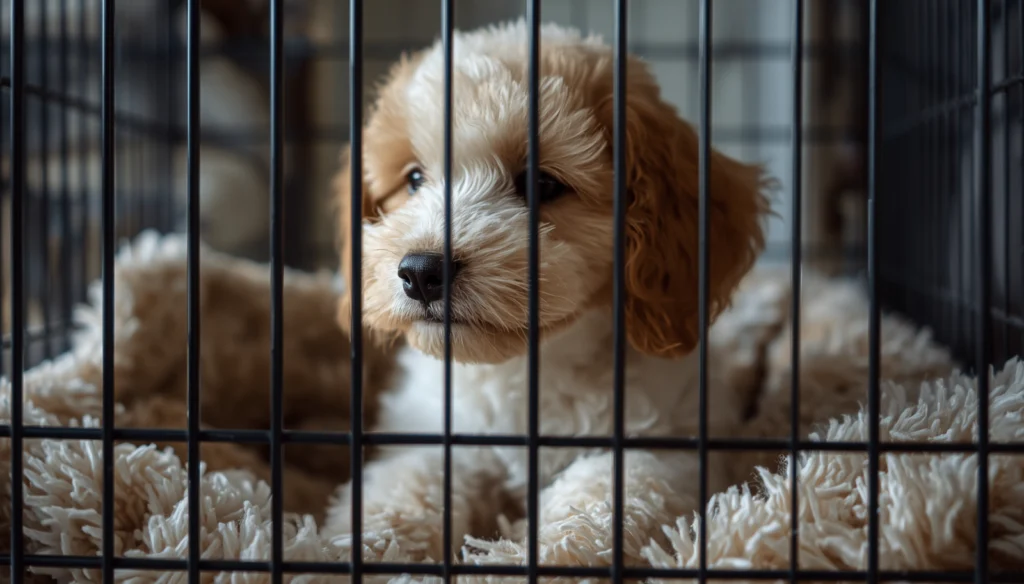
Puppy crying in playpen is common because the barrier itself can feel frustrating. Your puppy can see you, hear you, and smell you, but cannot reach you.
Before blaming the pen, check:
- Does your puppy need a potty break?
- Are they overtired?
- Was play too wild beforehand?
- Is the pen too far away too soon?
- Do you only use the pen when leaving?
- Is the pen boring or uncomfortable?
If potty timing is part of the chaos, read our post on why Toy Poodles seem so hard to potty train. A tiny bladder can easily get confused with anxiety if the routine is too loose.
A better pen routine:
- Potty first
- Calm chew or sniffing activity
- Into the pen while you sit nearby
- Reward quiet moments
- Step away briefly
- Return before panic
- End while your puppy is still coping
Exercise Helps, But It Is Not The Full Answer
A walk before leaving can help, but it will not fix true fear by itself.
For many Toy Poodles, wild pre-leave play makes things worse because the dog becomes overtired and emotional. A better routine is calmer.
Try:
- Short sniff walk
- Potty break
- Simple training game
- Lick mat or safe chew
- Quiet settle time
- Tiny departure practice
If your puppy also gets bitey when overstimulated, read our post on why your Toy Poodle puppy biting feels so intense. Biting, barking, crying, and potty accidents often show up together when the whole daily rhythm is too loose.
When Treats Do Not Work
Many owners hear, “Just give a stuffed food toy and leave.”
That can work for a relaxed dog. It often fails for a panicked one.
If your Toy Poodle ignores their favorite treat the second you leave, that is useful information. It means the absence is already too hard.
Instead:
- Give the food toy while you are home.
- Let your dog enjoy it with no pressure.
- Add one tiny movement away.
- Return before they stop eating.
- Slowly pair chewing with safe distance.
Food should support calm training. It should not be used to cover panic that is already too big.
How Long Can A Toy Poodle Be Left Alone?
There is no perfect number for every dog. It depends on age, bladder control, health, training history, and emotional confidence.
A young puppy needs frequent potty breaks and company. An adult Toy Poodle may learn longer absences if they are comfortable and prepared. A senior Toy Poodle may need shorter gaps again because of health or bladder changes.
When Toy Poodle crying when left alone is happening often, the better question is not, “How long should they cope?” The better question is, “What can my dog handle calmly today, and how do I build from there?”
When To Get Professional Help

Get help sooner if your Toy Poodle:
- Injures themselves trying to escape
- Scratches doors until paws are sore
- Destroys crates, gates, or door frames
- Panics for most of the absence
- Drools heavily or pants intensely
- Has sudden new anxiety as an adult
- Has sudden indoor accidents
- Cannot relax even when you are home
A vet can rule out pain, urinary problems, digestive issues, and other medical causes. A qualified reward-based trainer or veterinary behavior professional can help build a plan for your actual dog.
My Toy Poodle Owner Takeaway
The biggest lesson I learned is that alone-time confidence is built before the big absence, not during it.
If my Toy Poodle is already worried at the sound of keys, I do not need a longer departure. I need an easier repetition. If he cannot settle behind a gate, I do not need to jump straight to the front door. I need to help him feel safe one tiny layer at a time.
That is why Toy Poodle crying when left alone responds best to calm structure, not pressure. These little dogs learn quickly, but they also feel quickly. When we stop treating the crying as manipulation and start treating it as information, the whole process becomes kinder and more effective.
FAQ
Why does my Toy Poodle cry when I leave the room but not the house?
Your dog may be reacting to distance, not just the front door. Start with room-to-room confidence before practicing full departures.
Should I ignore my Toy Poodle crying when left alone?
Ignore only brief, mild fussing if your dog is not distressed. Do not ignore panic signs like frantic barking, clawing, pacing, trembling, or refusal to eat.
Will my Toy Poodle grow out of crying when left alone?
Some puppies improve with maturity, but many need gentle home-alone training. Waiting without a plan can make the crying pattern stronger.
Why does my Toy Poodle stop eating treats when I leave?
A dog who refuses favorite food during absence may be over threshold. Make the separation easier and rebuild from a calmer starting point.
Is getting a second dog the answer?
Not usually. If your Toy Poodle is attached to you, another dog may not fix the fear of you leaving. Build alone-time confidence first.
Can I use a camera for alone-time training?
Yes. A camera helps you see when your Toy Poodle starts to worry, so you can keep absences shorter than the panic point.
What should I read next?
Start with why your Toy Poodle gets upset when you pick up your keys. If potty issues are also happening, read why your Toy Poodle is peeing inside again. If overstimulation is part of the routine, read why your Toy Poodle puppy biting feels so intense.