
Why Does My Toy Poodle Bark at Every Noise? 7 Fixes

Why does my Toy Poodle bark at every noise? Most often, your dog is alerting you to unfamiliar sounds, reacting to movement outside or responding to noises they find exciting or unsettling. Toy Poodles can be attentive, quick to notice changes and sensitive to what happens around their home. To reduce excessive barking, identify the triggers, limit repeated exposure where practical, reward calmer responses and teach your dog what to do when a noise occurs.
The goal isn’t necessarily to stop every bark. A brief alert can be normal. What matters is helping your Toy Poodle feel comfortable enough to stop monitoring the sound and return to resting, playing or another everyday activity.
Whether your Toy Poodle barks at footsteps outside the door, neighbours talking, cars passing or sounds you cannot hear, the following steps will help you understand what’s happening and begin building a calmer routine.
Why Do Toy Poodles Bark at Every Little Sound?
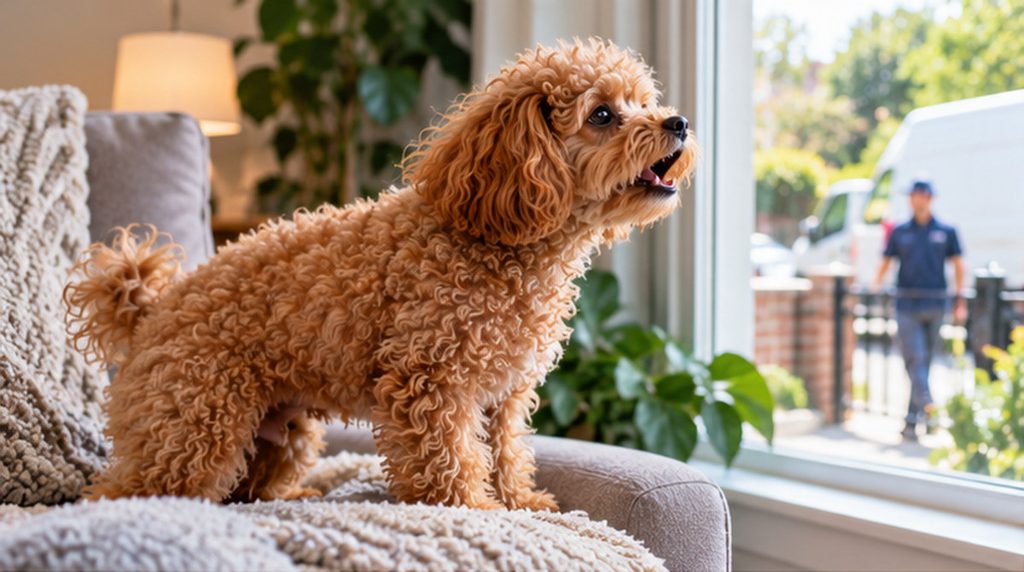
Toy Poodles may be small, but they can be highly observant dogs. An ordinary household noise can attract their attention long before you notice anything unusual.
However, not every bark means the same thing.
Alert barking: Your Toy Poodle hears a sound, gives one or two sharp barks and looks toward the source. They may settle quickly once the activity ends.
Watchdog-style barking: Your dog rushes toward a window or door, watches the area and continues barking as people or vehicles move past.
Fear-related barking: Your Toy Poodle may bark while retreating, trembling, hiding or showing a tense body posture. This behaviour needs a gentler approach than ordinary alert barking.
Excitement-related barking: A familiar sound, such as a delivery arriving or someone returning home, can trigger anticipation and energetic barking.
Learned barking patterns: Some dogs discover that barking leads to an interesting response. You might stand up, approach the window, speak to them or begin searching for the source.
These behaviours can overlap. Your Toy Poodle might initially bark because a noise is unfamiliar, then continue because the entire household becomes involved.
Before attempting to change the barking, watch what happens immediately before and after it.
What Your Toy Poodle’s Barking May Be Telling You
| Trigger | Possible reason | First step to try |
|---|---|---|
| Footsteps outside the door | Alertness or uncertainty | Encourage movement away from the doorway |
| Neighbours talking | Sensitivity to nearby sounds | Reduce sound exposure and reward calm responses |
| Cars or people passing windows | Repeated visual and sound triggers | Limit lookout opportunities |
| Doorbell ringing | Excitement or expectation of visitors | Practise a separate doorbell routine |
| Household noises at night | Alertness, disruption or discomfort | Check the environment and look for changes in behaviour |
| Barking at sounds you cannot hear | Distant sounds, vibrations or learned patterns | Record when and where the barking happens |
This simple distinction helps you choose an appropriate response instead of treating every barking episode as the same problem.
How to Stop a Toy Poodle Barking at Every Noise: 7 Practical Fixes
1. Identify the Noises That Trigger Barking
Start by identifying which sounds cause the biggest reactions.
For two or three days, observe your Toy Poodle without deliberately creating extra noise.
Write down:
- What sound happened before the barking?
- Where was your Toy Poodle standing or resting?
- Did your dog run toward the sound or move away?
- How long did the barking continue?
- What helped your dog return to normal?
You might discover that your Toy Poodle ignores television noise but reacts every time a neighbour closes a door.
Another dog might remain calm around traffic but bark when someone walks past the living room window.
Why this helps: Training becomes easier when you work with one manageable trigger instead of trying to solve every noise-related reaction at once.
2. Reduce Barking at Windows, Doors and Other Lookout Spots
Some Toy Poodles spend a surprising amount of time monitoring their surroundings.
A sofa positioned beside the front window, a bed near the entrance or a favourite perch overlooking the street can provide endless opportunities to practise barking.
Rather than constantly asking your dog to stop, change the setup.
Try these adjustments:
- Move your Toy Poodle’s resting area farther from the front door or busiest window.
- Close curtains or adjust blinds during periods of heavy pedestrian activity.
- Position a comfortable mat in a quieter part of the room.
- Use gentle background sound if it helps soften predictable hallway noises.
- Offer an appropriate chew, food puzzle or other calming activity away from the lookout area.
You do not need to block every view or prevent your dog from noticing ordinary life.
The purpose is to reduce constant exposure while you build a more relaxed response.
A useful starting point: If your Toy Poodle barks from the back of the sofa whenever someone walks past, try moving their preferred resting place before introducing more training.
3. Teach Your Toy Poodle to Move Away From the Noise
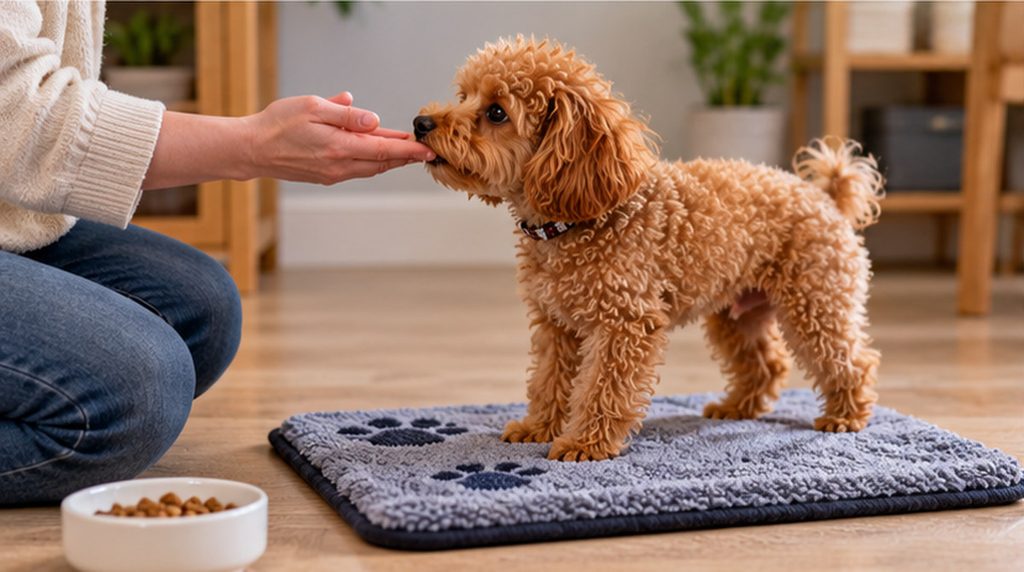
When a dog hears something unfamiliar, they may immediately rush toward the window or doorway.
Instead, teach a simple alternative behaviour: turn toward you and move to a comfortable mat.
Start when the house is quiet.
Step 1: Teach a hand touch.
Hold your open palm a short distance from your Toy Poodle’s nose. When they voluntarily touch or approach your hand, say “yes” and give a small reward.
Repeat until your dog comfortably follows your hand for one or two steps.
Step 2: Introduce a resting mat.
Place a non-slip mat away from the main noise source.
Reward your Toy Poodle for stepping onto it. Gradually reward brief moments of remaining there, without forcing them to stay.
Step 3: Connect the two behaviours.
Use the hand touch to guide your dog towards the mat. Reward them when they arrive.
Keep sessions short and easy.
Once your Toy Poodle understands the routine, it can become a familiar alternative to rushing towards every sound.
Do not physically force a frightened dog onto the mat. If your Toy Poodle is too distressed to respond, reduce the noise exposure and begin again under easier conditions.
4. Help Your Toy Poodle Become More Comfortable With Everyday Sounds
If your Toy Poodle barks at noises outside, gradual sound training can help.
This involves introducing a sound at a level your dog can comfortably handle and pairing it with something pleasant.
For example, you could practise with a gentle knock on an interior door.
- Prepare several tiny, appealing treats.
- Make one very soft, predictable sound.
- Immediately offer a treat while your Toy Poodle remains comfortable.
- Allow a pause before repeating the exercise.
- Keep the next repetition at the same easy level unless your dog is consistently relaxed.
You can gradually introduce slightly more noticeable sounds, but only when your dog is comfortable.
This approach combines gradual exposure with positive associations.
Important: If your Toy Poodle is frightened by a sound, you do not have to wait for complete silence before offering reassurance or food. The aim is to help change how your dog feels about the noise, not punish the emotional reaction.
If your dog stops accepting treats, freezes, retreats or becomes more distressed, the exercise is too difficult. Stop and make the next session easier.
Never deliberately expose your Toy Poodle to loud recordings to test their tolerance.
Recorded sounds can also differ substantially from real footsteps, door vibrations or hallway activity, so practise gently with everyday sounds when your dog is ready.
5. Use a Consistent Response When Unexpected Noises Happen
You cannot control every sound in your home.
A delivery driver might close a gate, a neighbour could drop something or a vehicle might sound its horn outside.
For ordinary alert barking, try this routine:
- Remain calm and avoid adding unnecessary excitement.
- Briefly acknowledge the sound if that is part of your normal routine.
- Ask for a familiar hand touch or mat response if your dog is able to respond.
- Reward moving away from the trigger.
- Return to your usual activity once your Toy Poodle has settled.
If your dog is frightened, prioritise comfort and distance instead. You can move together into a quieter room or use a gentle treat scatter away from the noise if your dog is able to eat.
Avoid repeatedly shouting “quiet” over the barking. Adding another loud voice often makes it harder for your dog to understand what you want.
The aim is to establish a predictable response rather than turning every unexpected noise into a household event.
6. Make a Separate Plan for Doorbells, Footsteps and Apartment Noise
Some sounds need more specific solutions.
Toy Poodle Barking at Footsteps Outside the Door
Footsteps in a hallway can be frustrating because your dog hears approaching movement without seeing the person.
This is especially common in apartment buildings and homes with shared entrances.
Try moving your Toy Poodle’s resting spot away from the front door.
If the footsteps happen regularly, such as when neighbours leave for work, prepare a quiet activity before that time.
Once your dog is comfortable with gentle practice sounds, reward their ability to notice footsteps and remain away from the entrance.
Do not repeatedly open the door to show your Toy Poodle that nobody is there. This can turn every sound into another opportunity to investigate.
Toy Poodle Barking at Every Sound in an Apartment
Apartment living can present a difficult combination of unfamiliar sounds.
Lifts, hallway conversations, doors closing and movement through shared walls may all be audible.
A practical approach is to create a quieter resting area away from the noisiest shared boundary.
Soft furnishings and low-level background sound may reduce the prominence of some noises, although they will not eliminate vibrations or sudden sounds.
Practise your Toy Poodle’s calm-response routine when the building is relatively quiet before expecting success during busy periods.
Toy Poodle Barking at the Doorbell
Doorbells often predict something exciting: a visitor entering the home.
Prepare a gate, interior door or safe resting area before answering.
Teach your Toy Poodle to move away from the entrance and reward calm behaviour around gentle doorbell practice.
For a complete arrival routine, read Teaching a Toy Poodle to Stay Calm When Visitors Arrive.
7. Track Progress Instead of Expecting Immediate Silence
One of the biggest mistakes owners make is deciding that training has failed because their Toy Poodle still barks occasionally.
Success is often gradual.
At first, your dog might bark eight times instead of fifteen.
Later, they may look towards the hallway but remain on their mat.
Eventually, they might hear a familiar noise, look towards you and return to resting.
These are useful signs of improvement.
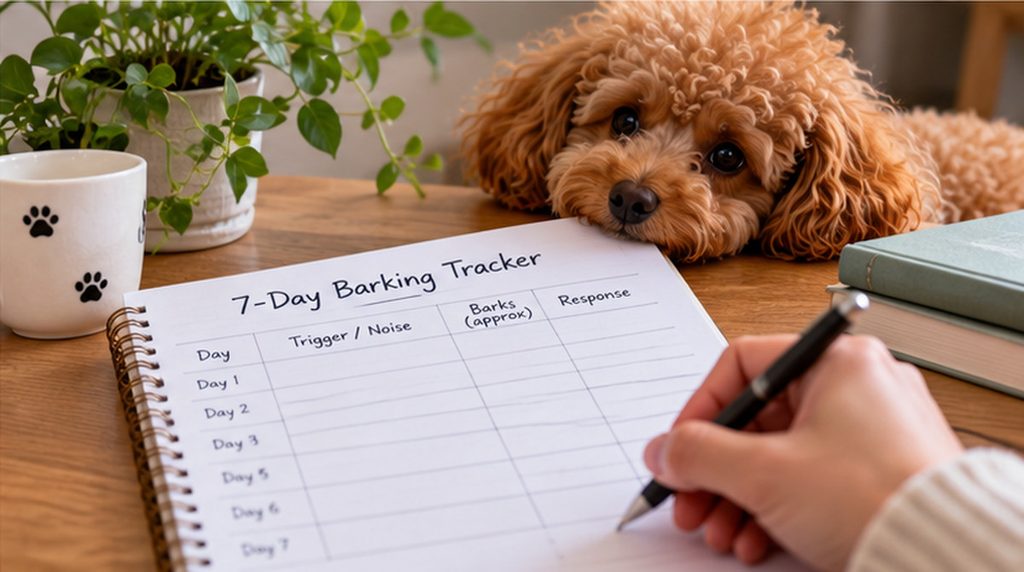
Keep a simple record of:
- The noise that triggered barking.
- The approximate number or duration of barks.
- Whether your dog moved towards or away from the sound.
- How quickly your Toy Poodle settled.
- Whether the reaction looked calmer or more distressed than before.
The goal is not to eliminate normal communication. It is to reduce excessive reactions and improve your dog’s ability to recover.
Why Does My Toy Poodle Bark at Noises at Night?
Nighttime barking can feel particularly difficult because the house is quiet and every sound seems more noticeable.
Your Toy Poodle may hear an outside door closing, nearby animals, passing traffic or movement through a shared wall.
Start by checking whether the sleeping area is comfortable, suitably quiet and away from recurring disturbances.
A consistent evening routine may help some dogs settle more predictably.
Avoid turning every harmless overnight sound into an extended investigation.
However, sudden nighttime barking deserves particular attention, especially if your Toy Poodle previously slept peacefully.
Discomfort, changes in hearing or vision, anxiety and age-related health conditions can contribute to altered behaviour.
If the change is new, persistent or accompanied by pacing, confusion, pain or unusual restlessness, arrange a veterinary examination rather than assuming it is simply a training problem.
A Simple 7-Day Plan for Reducing Noise-Related Barking
This is a starting framework, not a promise that barking will disappear within a week.
Move at your Toy Poodle’s pace. If a stage causes distress, return to an easier one.
| Day | Focus | What to do |
|---|---|---|
| Day 1 | Identify triggers | Observe the sounds, locations and times associated with barking. |
| Day 2 | Adjust the environment | Reduce access to one busy lookout area and establish a quieter resting place. |
| Day 3 | Introduce hand touch | Practise a few easy repetitions in a quiet room. |
| Day 4 | Build the mat routine | Reward voluntarily approaching and briefly resting on the mat. |
| Day 5 | Introduce a gentle sound | Pair a very mild, predictable noise with something pleasant. |
| Day 6 | Connect the skills | If your dog is comfortable, practise turning towards you and moving away from a mild sound. |
| Day 7 | Review progress | Compare reactions, identify what helped and choose one skill to continue. |
Some Toy Poodles will need several sessions at one stage before moving forward.
That’s completely reasonable.
A short, comfortable training session is more useful than repeatedly exposing your dog to a difficult sound.
Common Mistakes That Can Make Toy Poodle Barking Worse
Even well-intentioned owners sometimes create routines that unintentionally encourage more barking.
Shouting over your dog: A louder voice can increase excitement or uncertainty. Use familiar cues calmly when your dog is able to respond.
Repeatedly investigating every sound together: If barking always leads to a trip to the window, your Toy Poodle may learn that every noise requires an inspection.
Giving unlimited access to busy lookout points: Watching a lively street all day creates repeated opportunities to rehearse barking.
Training with sounds that are too loud: If your dog panics, the exercise is too difficult. Reduce the intensity rather than pushing through.
Assuming exercise alone will solve barking: Walks, sniffing and enrichment are valuable, but a dog can be physically tired and still react strongly to unfamiliar sounds.
Using punishment or startling devices: Shock collars, spray deterrents and similar methods can increase fear and do not teach your dog a safer response.
Ignoring genuine distress: A frightened Toy Poodle may need comfort, distance and professional support rather than repeated obedience cues.
A calmer response develops through consistency, appropriate management and training your dog can comfortably understand.
When Is Barking at Every Noise a Sign of Anxiety or a Health Problem?
Not all frequent barking is ordinary alert behaviour.
Pay closer attention if your Toy Poodle:
- Trembles, hides or tries to escape when a sound occurs.
- Cannot relax long after a noise has stopped.
- Refuses familiar treats or activities during sound exposure.
- Suddenly starts barking much more than usual.
- Reacts intensely to sounds that previously caused little concern.
- Shows unusual nighttime restlessness, confusion or other behavioural changes.
A sudden or unexplained change warrants veterinary advice, particularly if your dog may be in pain or is getting older.
For persistent fear-related barking, a qualified reward-based trainer or veterinary behaviour professional can help develop an individual plan.
If the barking occurs mainly when your dog is left alone, investigate that separately rather than assuming ordinary noise-alert training will address it.
Frequently Asked Questions
Can I Stop My Toy Poodle Barking at Every Little Noise?
You can often reduce excessive noise-related barking by managing triggers, teaching alternative behaviours and gradually creating positive associations with manageable sounds. Some alert barking may remain normal. Aim for a calmer, shorter response rather than expecting complete silence.
Why Does My Toy Poodle Bark at Noises Outside but Not Inside?
Outside sounds can be unpredictable and difficult for your dog to identify. Footsteps, vehicles, conversations and movement near the home may trigger alertness or uncertainty. Start by identifying which outdoor sounds cause the strongest reactions and reducing repeated exposure where possible.
How Do I Stop My Toy Poodle Barking at Footsteps Outside the Door?
Move your dog’s resting area away from the entrance, reward comfortable responses to gentle practice sounds and teach a familiar place to settle. Avoid repeatedly inviting your Toy Poodle to inspect the doorway whenever footsteps occur.
Why Does My Toy Poodle Bark at Nothing?
Your Toy Poodle may hear distant sounds, detect vibrations or notice movement you cannot easily perceive. Observe the timing and location of the barking. If the behaviour begins suddenly, becomes unusually intense or appears alongside other changes, seek veterinary advice.
Should I Ignore My Toy Poodle When They Bark?
Not automatically. If barking is related to fear or distress, ignoring the dog may leave the underlying problem unresolved. Instead, assess what triggered the barking, offer appropriate support and reward a manageable alternative response when your dog is comfortable enough to learn.
Will More Exercise Stop My Toy Poodle Barking at Every Noise?
Regular exercise, sniffing opportunities and enrichment can support overall wellbeing, but they may not resolve established noise reactions. Combine an appropriate daily routine with environmental adjustments and gentle sound training.
How Long Does It Take to Reduce Toy Poodle Alert Barking?
There is no fixed timetable. Some owners notice small improvements after several consistent sessions, while dogs with longstanding habits or significant noise fears may need much longer. Look for shorter reactions and faster recovery rather than setting a strict deadline.
Helping Your Toy Poodle Feel More Comfortable at Home
If your Toy Poodle barks at every noise, begin with one trigger and one realistic change.
You might move their bed away from the front window, teach a hand touch or practise a gentle sound at a comfortable level.
Once that step becomes familiar, build on it gradually.
Your Toy Poodle doesn’t need to become completely silent to make progress. Learning that an ordinary sound doesn’t always require a prolonged response is already a useful achievement.
For more practical advice, explore our Toy Poodle Behavior guides or browse Toy Poodle Training routines.
If you prefer a structured printable routine after working through the free advice, visit the Toy Poodle Hub Shop for optional training guides and trackers.