Teaching a Toy Poodle to Stay Calm When Visitors Arrive
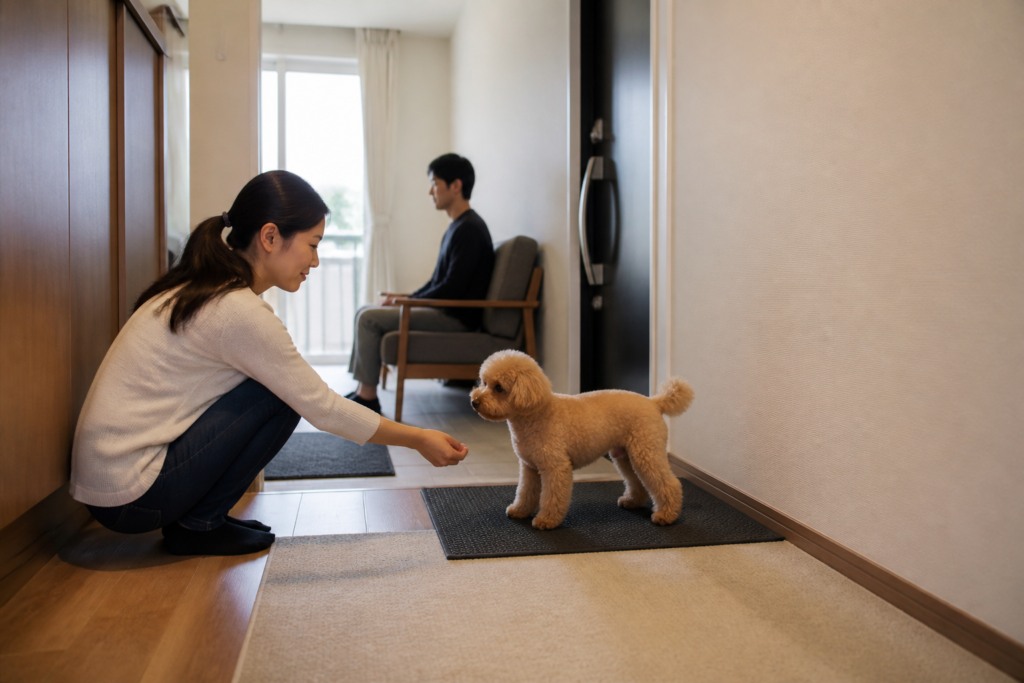
To help a Toy Poodle stay calm when guests arrive, move them away from the entrance before opening the door, send them to a well-practised waiting spot and keep the first few minutes quiet. Once the visitor is seated, you can allow a short greeting if your dog remains settled. If not, use a gate or another room for the visit. Meeting every guest is not required.
Start with doorway management
Training is much easier when your dog cannot rehearse dashing between ankles, jumping at coats or squeezing past the person entering. This matters with a Toy Poodle because a small, quick dog can disappear behind shopping bags or slip through an opening before anyone notices.
Choose a waiting spot several feet from the entrance and outside the path between the door and the main room. A non-slip mat works well because its edges give the dog a clear target. Avoid narrow hallways, shoe piles and places where a swinging door could crowd the mat.
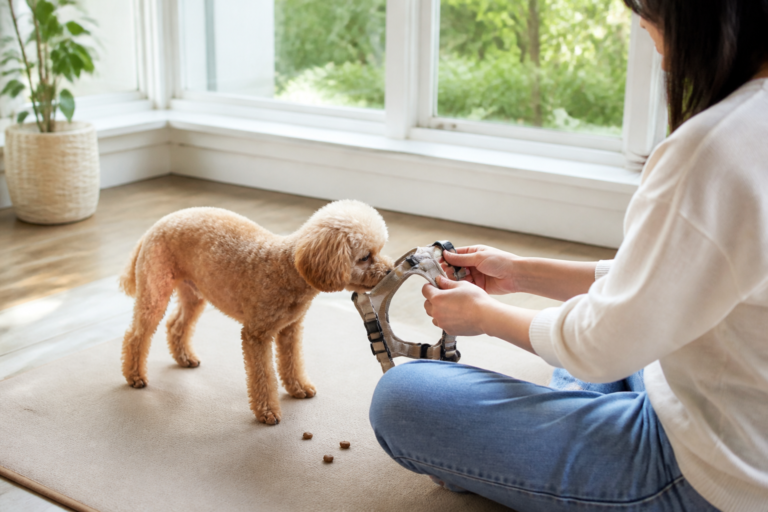
Add a physical backup such as a closed interior door, exercise pen or gate with gaps too narrow for your dog to pass through. A supervised harness and leash can also help, but an adult should hold the leash rather than attach it to furniture. Never try to manage the front door while carrying the dog; struggling arms, moving feet and an open exit are an awkward combination.
Give the waiting spot one clear purpose
The mat is a temporary station where your dog earns rewards while you answer the door. A separate bed, crate or quiet room can serve as a retreat during the visit. Keeping those roles distinct prevents confusion: the station involves staying engaged with you, while the retreat allows the dog to withdraw and be left alone.
Teach the mat when the house is quiet:
- Place it on the floor and reward any voluntary step toward it.
- When your dog puts all four paws on the mat, deliver several tiny rewards close to the surface.
- Take a short pause, reward again and then toss one piece of food away to reset the exercise.
- Gradually add a second or two of waiting before each reward.
- Introduce a simple cue, such as “place,” just before your dog moves onto the mat.
- Finish with a separate release word and toss a reward away from the station.
Toy-sized portions are useful here because doorway practice requires many repetitions. The reward should be small enough to eat quickly without turning each exercise into a lengthy snack break.
A sit or down is optional. Some dogs remain more comfortable standing and watching, so focus first on staying within the mat’s boundary. If your dog repeatedly steps off, reduce the waiting time instead of physically repositioning them.
Add realistic household movement
Once the mat is familiar, practise the actions that usually predict a visitor. Walk toward the entrance, pick up your keys, touch the handle or put on a coat. Begin with one small action, return to the mat and reward your dog for remaining there.
Increase the difficulty in modest increments. Opening the door by an inch is a separate step from opening it fully. Stepping outside is another. This approach is especially helpful for an alert Toy Poodle who notices subtle changes in the household routine before the bell even rings. A useful next read is Why Does My Toy Poodle Follow Me From Room to Room?.
The mat cue is not a substitute for a barrier beside an open exterior door. Continue using both until the entire arrival routine is reliable.
Practise knocks and doorbells at an easier level
A full-volume bell followed by an unfamiliar person is often too much for an early lesson. Start with a quiet recording or one soft knock from a helper. Guide your dog to the station, reward several moments of waiting and end the repetition before excitement builds.
Over time, let the sound itself predict the mat. Pause briefly after the knock and see whether your dog turns toward the station. Reward that decision generously. If the dog races to the entrance instead, lower the volume, increase the distance from the door or return to prompting the mat immediately.
Change one detail per session. You might practise a louder knock today and a moving door tomorrow. Combining a loud bell, opening door and entering helper all at once makes it difficult to identify which part needs more work.
Rehearse an arrival in short scenes
Ask a familiar person to help with several brief exercises rather than staging a long visit. For example, the helper can:
- walk up the path and leave;
- knock once, then wait outside;
- stand still while you open and close the door;
- enter without speaking to the dog;
- walk directly to a chair and sit down; or
- stand up, collect a bag and leave.
Departures deserve practice too. A small dog can be hidden by legs and coats as everyone gathers near the exit. Return your Toy Poodle to the station or secure area before the visitor stands, and keep the barrier closed until the exterior door is shut.
A simple routine for real guests
- Secure the dog first. Use the mat and barrier before approaching the front door.
- Bring the visitor inside. Ask them to ignore the dog while they remove shoes or put down bags.
- Have the visitor sit. This reduces looming, reaching and rapid movement at the dog’s eye level.
- Reward useful choices. Notice waiting, looking back at you and moving away from the entrance.
- Choose greeting or separation. Make the decision from what is happening now, not from how your dog behaved with a different person.
You can give the visitor a short instruction before they enter:
“Please come in and sit down without calling the dog. Leave the mat and gated area alone. I’ll tell you if we’re going to do a greeting.”
This also prevents a common small-dog problem: guests assuming that a curly, toy-sized dog wants to be picked up or cuddled. Ask visitors not to lift, hug, chase or lean over your dog.
Decide what your dog needs that day
Barking and rushing can accompany excitement, uncertainty or both. Body language should be read as a pattern and in context rather than as a single definitive signal. A useful next read is How Do I Create a Calm Bedtime Routine for a Toy Poodle?.
A dog who is ready for controlled contact may show easy movement, approach without repeated retreating and respond to familiar cues. A dog who would benefit from more space may keep moving away, freeze when a hand approaches, remain intensely focused on the visitor or become more agitated when the person stands.
Approaching is not automatic permission to touch. A Toy Poodle may come close simply to investigate shoes or clothing. Let the dog choose whether to remain nearby, and make sure the visitor does not follow if the dog walks away.
If your dog is friendly but overexcited
Wait until the guest is seated, then approach on a loose, supervised leash. Allow only a few seconds of contact before guiding the dog back to the mat. Brief greetings with pauses between them are usually easier to manage than unrestricted access.
If jumping starts, move away from the guest and wait for four paws on the floor. Avoid scolding or leash jerks; access to the person simply pauses until the dog is steadier.
If your dog prefers distance
Keep the barrier closed and let the dog observe without pressure. The guest should not offer a hand, call repeatedly or use food to lure the dog closer. You can reward calm watching from the safe side of the barrier.
If your dog chooses the retreat area, the visitor should leave that space undisturbed. Separation for the entire visit is a valid plan, not a failed training session.
Prepare for unexpected callers
For a delivery or unplanned visitor, ask the person to wait while you put your dog behind a secure door or gate. Skip the greeting and handle the interaction at the entrance. Keeping a container of rewards near the door can make this faster, but food should supplement secure management rather than replace it. A useful next read is Toy Poodle Crying When Left Alone: A Calm Owner’s Guide.
If frequent deliveries trigger repeated rushing, place a note by the bell asking callers to knock softly or leave parcels without ringing when practical.
Fix the most common sticking points
Your dog stays on the mat but still barks
The station is already preventing a doorway scramble. Reward short pauses and moments when your dog turns attention back to you. For the next practice, use a quieter sound or position the mat farther away.
Your dog leaves as soon as you touch the handle
Break that movement into smaller pieces. Reach halfway toward the handle, return and reward. Progress to touching it only when the earlier motion no longer pulls the dog off the mat.
Practice goes well, but real visits fall apart
A genuine guest brings footsteps, conversation, unfamiliar scents and unpredictable movement. Use your barrier during normal visits and recruit a helper to rehearse one of those details at a time.
Your dog settles until the visitor stands
Treat standing up as a new arrival exercise. Ask the guest to rise briefly while you reward at a comfortable distance, then have them sit again. Secure your dog before the visitor walks around or prepares to leave.
Judge progress by practical changes: fewer attempts to reach the door, a faster move to the station and an easier return to quiet activity. If the routine remains difficult to manage safely, a qualified reward-based trainer can help you simplify the setup and coach controlled practice sessions.