How to Prevent Matting Behind a Toy Poodle’s Ears
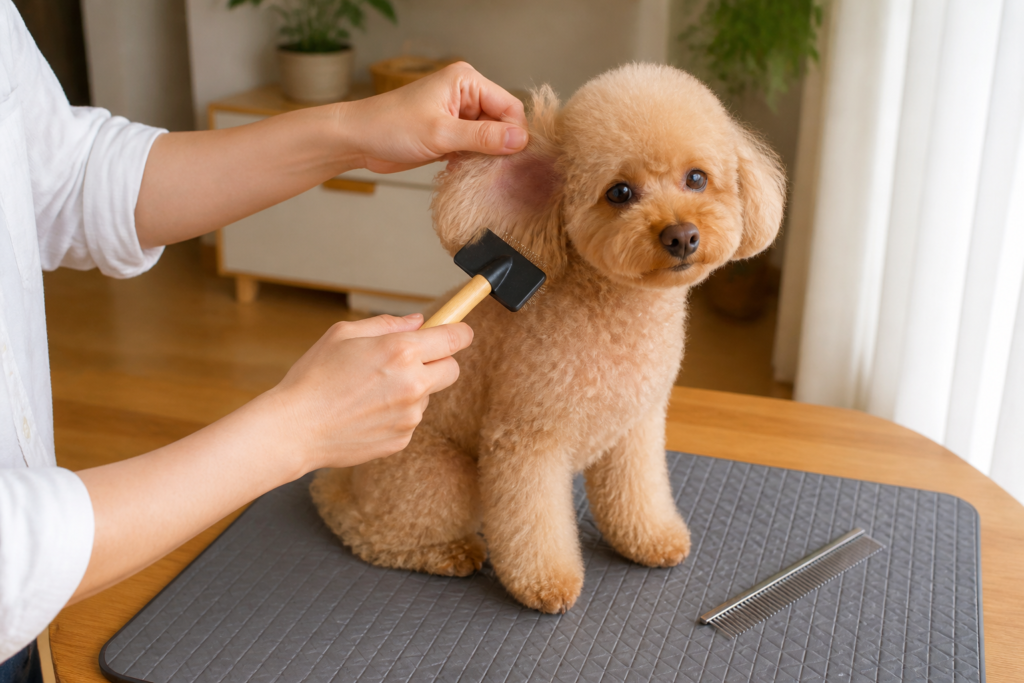
To prevent matting behind a Toy Poodle’s ears, check the area daily, line-brush the coat in narrow sections and finish with a metal comb from near the roots to the ends. Check again after baths, wet walks and collar or harness use. If the comb catches, return to that small section with the brush instead of pulling the comb through.
A Toy Poodle’s coat can look smooth on the surface while tangles remain hidden beneath the ears. Regular checks help you find and separate them before they tighten into difficult mats.
Why Toy Poodles mat behind their ears
A Toy Poodle’s dense, curly coat traps loose strands, particularly under long ear furnishings. Because the ears rest against the sides of the head, the concealed coat is exposed to frequent movement and friction.
Collars, harness straps and clothing can add more friction around the neck and ears. Dampness, outdoor debris and incomplete brushing also encourage strands to bind together.
This area is easy to miss because brushing the visible outside of the ear does not reach the hair underneath or the narrow section where the ear meets the head.
What you need
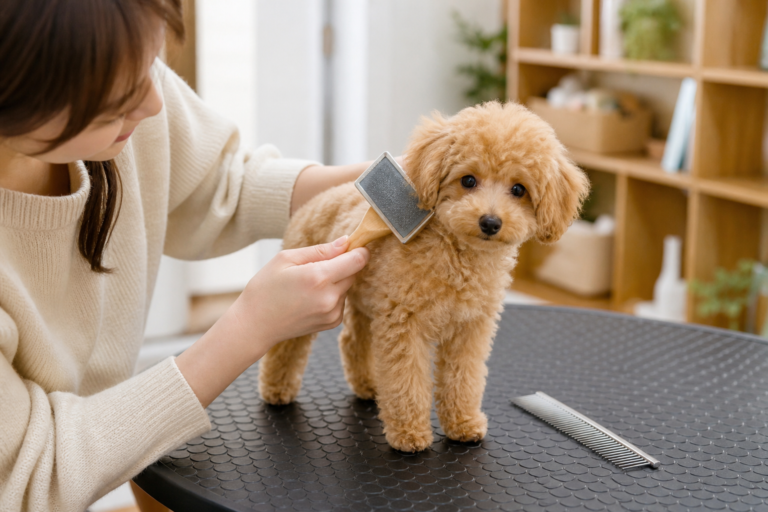
- A small, gentle slicker brush: Choose a size that is easy to control around a Toy Poodle’s head. Use light pressure and short strokes.
- A metal grooming comb: A comb with both wide and narrow teeth is useful for checking whether the coat is clear.
- Optional dog-safe detangling spray: See dog-safe detangling spray options on Amazon (paid link) Use it according to the label to add slip when needed. It should not replace careful brushing.
- Small treats: Rewards can help your Toy Poodle become comfortable with ear handling and brief grooming sessions.
A pin brush may smooth the visible coat without reaching a developing tangle. For the hair behind the ears, a controlled slicker-and-comb routine provides a more thorough check.
How to brush behind a Toy Poodle’s ears
1. Prepare the grooming area
Choose a quiet, well-lit space and place your tools within reach. Remove your Toy Poodle’s collar or harness so you can inspect the hair it normally covers. Position your dog comfortably on a stable, nonslip surface.
2. Lift and support the ear
Lift the ear only far enough to expose the coat behind it. Support the ear gently and keep brushes, combs and grooming products on the external coat and away from the ear opening.
Feel through the hair with your fingertips before brushing. A developing tangle may feel like a thick patch, joined strands or a small lump hidden beneath the curls.
3. Line-brush narrow sections
Part the coat to reveal a narrow layer of hair. Brush that layer with short, light strokes, beginning at the ends if the section is tangled and moving closer to the roots as it separates. Release the next layer and repeat until you have covered the entire area.
This line-brushing method reaches the concealed coat instead of smoothing only the outer curls.
4. Work through small snags carefully
Hold the hair close to its base to reduce pulling. Begin at the outer edge of the snag and separate a few strands at a time. Avoid dragging the brush through the entire knot or repeatedly brushing the same spot.
If a knot does not loosen with light, patient brushing, stop and ask a professional groomer to handle it.
5. Use the comb test
After brushing, pass the metal comb slowly through the coat from near the roots to the ends, keeping it angled away from the ear flap.
If the comb stops, do not force it. Identify the snag, return to that section with the slicker brush and then test it again. The section is clear when the comb passes through without catching.
6. Reward your Toy Poodle
Lower the ear gently, offer a treat and repeat the process on the other side. Short, calm sessions are easier to maintain than occasional lengthy detangling sessions.
How often should you check and brush?
Check behind both ears daily, especially if your Toy Poodle has a full coat or long ear furnishings. Adjust the brushing frequency according to what you find.
- Long coat or full furnishings: Check daily and line-brush whenever the comb catches.
- Short pet trim: Continue regular checks, even if less brushing is needed.
- Frequent collar, harness or clothing use: Inspect the areas touched by straps or fabric after wear.
- Outdoor activity: Check after walks for dampness, leaves, seeds and other debris.
- Coat that tangles quickly: Increase the frequency of short sessions instead of using more pressure.
The goal is to find tangles while they are still loose. If the comb regularly catches between sessions, shorten the interval between checks. For a broader puppy grooming schedule, see how often to brush a Toy Poodle puppy.
Reduce friction and dampness
Daily brushing helps, but reducing friction can make the coat behind the ears easier to maintain.
- Remove the collar or harness during grooming and comb the hair it normally covers.
- Make sure straps are not trapping clumps of coat beneath them.
- Check the coat after your Toy Poodle wears a sweater, raincoat or other clothing around the neck.
- Remove leaves, seeds and loose debris instead of brushing over them.
- Dry the coat behind the ears thoroughly after bathing or wet walks.
Check for tangles before bathing because wetting an existing knot can make it harder to separate. Afterward, dry the hidden coat in small sections and use the comb test once it is dry.
Help your Toy Poodle accept ear handling
Introduce ear handling gradually, particularly with puppies or Toy Poodles that are new to home grooming.
- Touch the outside of the ear briefly, offer a treat and stop.
- Lift the ear for a moment, reward and release it.
- Touch the coat behind the ear with the back of the brush and reward.
- Make one light brush stroke before ending the session.
- Build toward brushing one small section at a time.
If your Toy Poodle repeatedly turns away or tries to leave, pause and return to an easier step later. Progress through calm repetition rather than trying to finish both ears in one session.
Coat options for Toy Poodles that mat frequently
Long ear furnishings require consistent maintenance. If tangles keep forming despite regular line brushing, ask a professional groomer to shorten the hidden hair behind the ears while retaining the visible ear shape you prefer.
A shorter pet trim can also make it easier to comb the coat from the roots to the ends. The best grooming interval depends on the chosen trim, coat length and how quickly tangles develop.
Give your groomer specific instructions, such as: “The hidden hair directly behind the ears tangles between appointments. Please keep that section practical to comb while retaining the outer ear furnishings.”
Common mistakes to avoid
- Brushing only the surface: A fluffy finish does not mean the coat is clear underneath. Confirm with a metal comb.
- Forcing the comb: Use it to find and check tangles, not to pull through them.
- Using heavy brush pressure: Work with light, controlled strokes and small sections.
- Bathing over knots: Check and separate loose tangles before wetting the coat.
- Pulling the ear for access: Lift and support it gently.
- Grooming inside the ear: Keep brushes, combs and detangling products on the external coat.
- Using household scissors: Do not attempt to cut out a tight mat behind the ear yourself.
- Continuing a difficult session: If a knot will not separate gently, let a professional groomer handle it.
When to use a professional groomer
Stop home detangling if a mat is tight, extensive, close to the base of the coat or difficult to separate from the ear flap. A professional groomer can decide whether to loosen or clip the mat.
Professional help is also useful if your Toy Poodle will not remain settled enough for careful tool use. Ask the groomer where friction tangles are forming and which coat length would suit the amount of brushing you can maintain.
Frequently asked questions
Can a collar contribute to matting behind the ears?
Yes. A collar can create friction where it touches the coat. Remove it during grooming, check the covered hair frequently and make sure curls are not bunched beneath the material.
Do I need detangling spray every time?
No. Many loose tangles can be managed with careful sectioning, light slicker brushing and a comb check. When extra slip is helpful, use a small amount of dog-safe detangling spray according to its label.
Can I use the metal comb by itself?
Use the comb mainly to locate snags and confirm that brushing is complete. If it catches, separate the strands with the slicker brush before testing the section again.
Will shorter ear furnishings prevent every mat?
A shorter trim can reduce maintenance, but curly hair may still tangle where it is exposed to friction or dampness. Continue checking behind the ears regularly.
What to keep in mind
Make the hair behind each ear part of your Toy Poodle’s daily coat check. Lift the ear gently, line-brush the hidden coat in narrow sections and use a metal comb to confirm that the hair is clear. Thorough drying, regular checks beneath straps and a manageable trim will further reduce tangles. Leave tight or difficult mats to a professional groomer.