How Often Should I Brush a Toy Poodle Puppy? Daily Guide
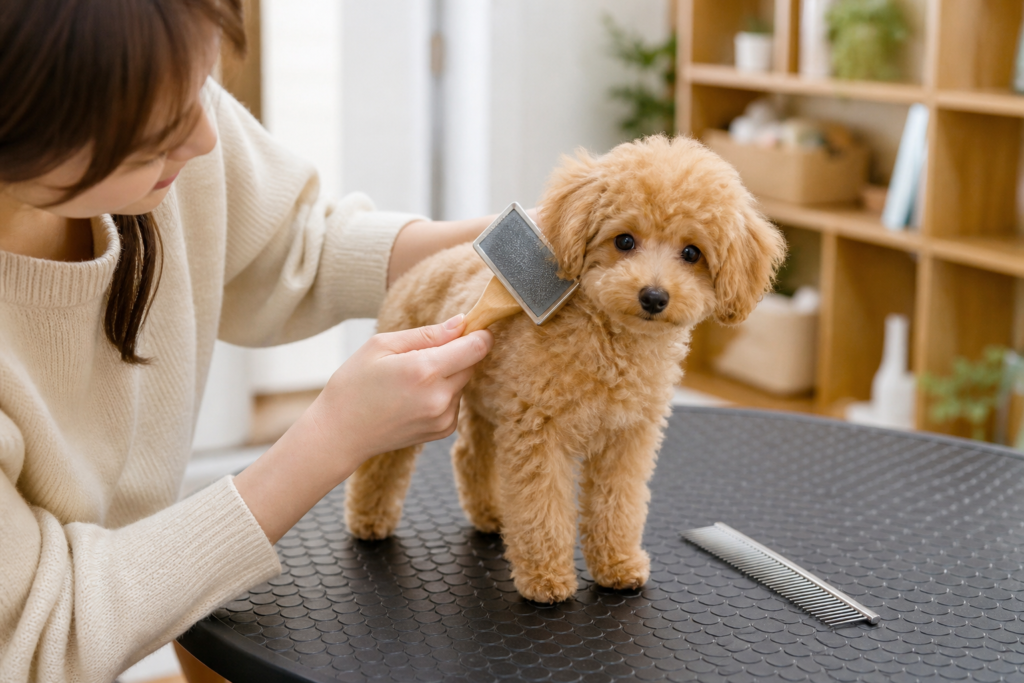
Brush a Toy Poodle puppy every day when the coat is medium-length or long. If your puppy has a close pet trim, make a quick coat check part of the daily routine and give the entire coat a thorough brush every day or two. During the first few weeks of training, several brief, calm sessions are better than trying to complete a long head-to-tail groom in one sitting.
What counts as daily coat care?
Daily care does not have to mean the same routine for every puppy. Coat length, harness use and grooming experience all affect how much work is needed.
| Coat or training stage | Sensible routine |
|---|---|
| Puppy new to brushing | Introduce the brush for a few moments at a time. Work on one easy area, reward calm behavior and gradually add more of the body. |
| Close puppy or pet trim | Check the coat daily with your fingers and comb. Complete a more thorough brush every day or two, paying attention to friction points. |
| Medium or growing coat | Brush and comb each day. The job can be divided between morning and evening. |
| Long or fluffy style | Work through the complete coat daily in narrow sections so hidden knots are not left beneath the outer curls. |
The comb provides the clearest test. If it moves through the coat easily from near the base of the hair to the ends, the routine is keeping up. Frequent snags mean the coat needs more detailed brushing, a shorter interval between sessions or a more manageable trim.
Why coat length changes the schedule
Loose hair tends to remain among a Toy Poodle’s curls rather than simply falling away. Movement then brings those hairs together, particularly beneath harness straps, behind the ears and around the legs.
A fluffy surface can also hide compacted curls underneath. Running a brush lightly over the visible layer may improve the shape without separating the full coat. That is why a longer style requires daily section work, while a close trim can often be maintained with a shorter check followed by regular full brushing.
The two basic tools you need
A simple home kit is enough for most puppy brushing routines:
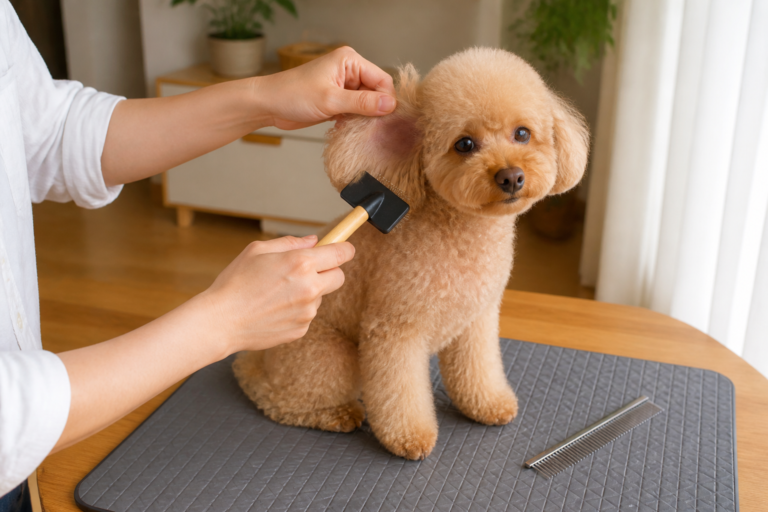
- Puppy-sized slicker brush See puppy-sized slicker brush options on Amazon (paid link): A small brush is easier to control around a Toy Poodle’s legs, chest and underside. The pins should move through the curls without being pressed firmly against the body.
- Metal grooming comb See puppy-sized slicker brush options on Amazon (paid link): Choose one with both wider and narrower tooth spacing. Use it after the slicker to locate any section that has not been fully separated.
The tools have different jobs. The slicker opens and separates the curls; the comb checks the result. Think of the comb as quality control rather than something to pull through resistance.
A brushing method that reaches beneath the curls
Section brushing—often called line brushing—prevents you from repeatedly polishing the top of the coat while missing what lies below. It sounds technical, but the method is straightforward.
- Set up on a stable surface. A non-slip mat on the floor is a practical choice for a small, active puppy. Keep the brush, comb and rewards within reach before you begin.
- Begin where handling is easiest. The back or side is usually less challenging than the paws, ears or tail. Starting there gives the puppy a chance to settle into the activity.
- Reveal a slim band of hair. Use one hand to lift the curls above the area you are working on. The exposed section should be narrow enough to see and control.
- Separate the section with light strokes. Work through the length of the hair without scraping or repeatedly dragging the brush over the same spot.
- Follow with the comb. Guide it gently through the finished section. If it stops, return to the slicker and work on a smaller amount of hair.
- Move in a consistent direction. Continue across the body in neighboring sections. An orderly pattern makes it easier to remember what has already been finished.
A complete groom does not have to happen all at once. You might cover the back, sides and chest in one session, then deal with the legs, ears and tail later in the day. What matters is that every area receives attention often enough for the coat length.
Give friction areas a closer look
Some parts of a Toy Poodle collect tangles faster because the hair is compressed or constantly moving. Check these places rather than assuming the whole coat needs equal attention:
- Behind the ears and beneath the ear hair
- Under a collar or harness
- Where the front legs meet the body
- Across the chest and underside
- Along the legs and around the feet
- Where the tail meets the body
After removing a harness, use your fingers to feel along the strap lines. A quick pass with the comb can catch a small snag before it becomes part of a larger knot.
How to teach a puppy to stay for brushing
Coat care is partly a grooming task and partly a training exercise. Expecting a young puppy to stand through a complete session immediately often creates an unnecessary contest.
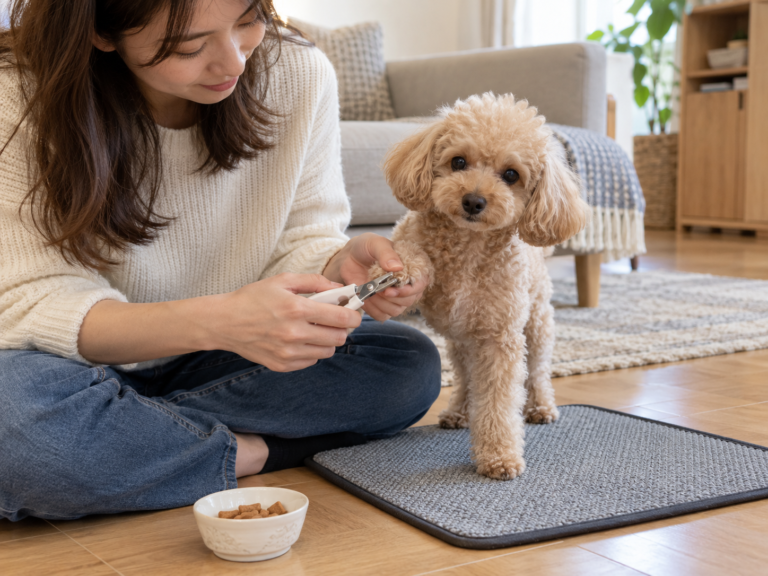
At first, place the puppy on the mat, touch an easy area with the brush and reward stillness. End after a few successful strokes. During later sessions, increase the amount of brushing gradually and introduce handling of the legs, feet, ears and tail one area at a time.
Keep rewards close enough that you do not have to release the puppy and search for them. Calm praise, a small treat or a brief play break can mark the end of the exercise. If the puppy becomes increasingly wriggly, shorten the next session rather than chasing it around with the brush.
It also helps to avoid saving every difficult area for last. Alternate a less popular spot, such as a foot, with an area the puppy already accepts. This keeps the whole session from becoming progressively harder.
What to do when you find a snag
Resistance is a signal to stop, not to pull harder. Locate the snag with your fingers and hold the hair above it so that your hand takes the pressure. Work on a small portion at a time, beginning at the loose ends and moving gradually toward the base.
Once the hairs have separated, test the area with the comb. It should pass through without being forced. If the knot is too tight to divide comfortably, leave it for an experienced groomer rather than trying to remove it with household scissors.
Choose a coat length that suits your routine
A longer Toy Poodle style requires more precise home care. If brushing regularly takes more time than you can sustain, a shorter pet trim is a practical adjustment rather than a grooming failure.
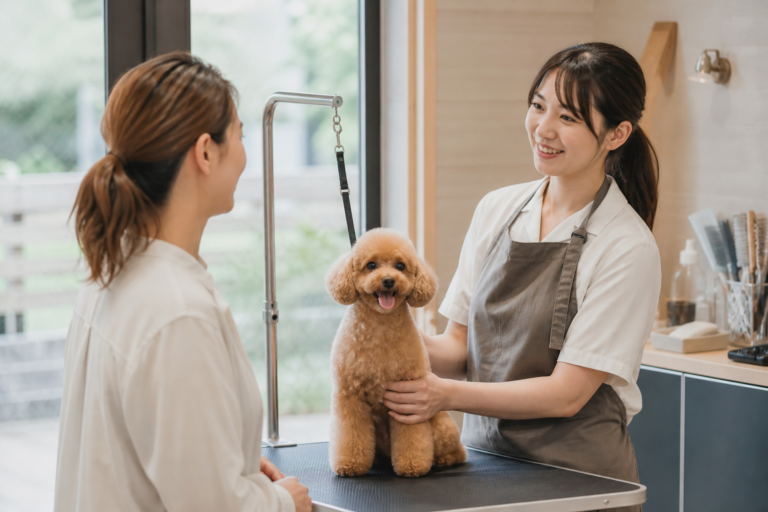
Tell the groomer how often you can realistically brush, which areas tend to knot and how much coat you want to manage. Before an early appointment, review what to tell the groomer at your Toy Poodle’s first groom. A written prompt list can help you describe the desired length and the level of upkeep you want.
The planning resource below provides a convenient place to organize those details:
A trim can simplify the routine, but the puppy will still need regular practice with standing, brushing, combing and having different parts of the body handled.
Signs that the routine needs adjusting
Do not wait for the whole coat to become difficult. Small changes can tell you that the current schedule is falling behind:
- The comb catches in the same areas from one session to the next.
- A previously quick brushing session is taking much longer.
- The coat is being brushed on top but remains packed beneath the outer curls.
- The ears, feet or underside are repeatedly postponed because the puppy loses patience.
- Harness lines develop snags soon after use.
The answer may be to divide the work into two sessions, spend more time on one friction area or request a shorter trim. The best schedule is one you can complete carefully and consistently.
Frequently asked questions
Can I brush a Toy Poodle puppy every other day?
A close-trimmed coat may be manageable with a thorough brush every other day, provided you still perform a brief daily check. Medium, long or especially fluffy coats are better brushed and combed each day.
When should brushing training begin?
Begin as soon as the puppy is settling into the home. Early sessions can last only a few moments. The initial goal is calm acceptance of the brush, comb and handling; fuller coat care can be added in stages.
Is a slicker brush enough on its own?
Not always. A slicker can make the outer coat look neat while leaving a small snag underneath. Following with a metal comb shows whether the brush reached through the complete section.
Should I brush before a grooming appointment?
Continue the normal routine rather than leaving all coat care until appointment day. It is also useful to note where the comb tends to catch so you can discuss those areas with the groomer.
The bottom line
For most Toy Poodle puppies, daily coat care is the simplest rule to follow. A long or growing coat needs a complete daily brush and comb, while a close trim may only require a quick check each day and a fuller session every day or two. Match the workload to the coat, keep training sessions manageable and use the comb to judge whether each area is truly finished.