What to Tell the Groomer at Your Toy Poodle’s First Groom
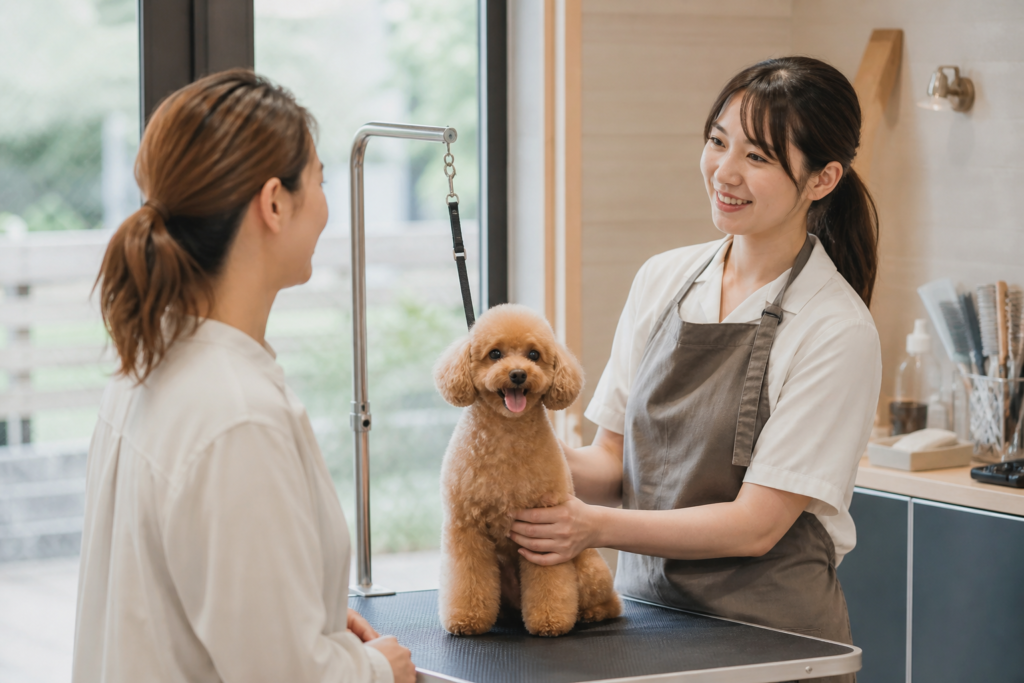
At your Toy Poodle’s first groom, tell the groomer that it is your dog’s first professional appointment, describe any handling sensitivities or health restrictions, explain the coat’s condition honestly, and agree on which areas should be trimmed. For many puppies, a gentle introductory groom—with bathing, careful drying, brushing, nail care, and a light face, foot, and sanitary trim—is more appropriate than attempting a complete haircut immediately.
Focus on making this appointment safe and manageable. You do not need to know every Poodle clip by name. Clear preferences, suitable reference photos, and permission to adjust the plan if your Toy Poodle becomes overwhelmed are more useful.
What to tell the groomer before the appointment
Allow time for a proper handover rather than giving instructions while rushing through the salon door. Cover the following points.
1. Say that this is the first professional groom
Do not assume the booking notes will reach the person handling your dog. Tell the groomer whether your Toy Poodle has experienced clippers, a salon-style dryer, nail handling, bathing, or standing on a grooming table.
If your puppy has only practised brief brushing sessions, say so. The groomer can then introduce unfamiliar equipment gradually instead of expecting your dog to tolerate every stage at once.
You might say:
“This is her first salon groom. She is comfortable with short brushing sessions, but she has not experienced clippers or a high-velocity dryer. I would rather keep the visit positive than insist on a complete haircut.”
2. Describe handling sensitivities and behaviour honestly
Explain how your Toy Poodle responds when you touch the paws, face, ears, tail, and legs. Mention squirming, mouthing, barking, freezing, or attempts to escape rather than describing the dog as “bad.” Specific observations help the groomer plan appropriate handling.
Also mention frightening experiences involving bathing, brushing, veterinary care, or noisy equipment. If your Toy Poodle shows intense fear or defensive behaviour, ask whether the salon has someone experienced in reward-based, low-stress handling.
A sudden change in tolerance, new defensive behaviour, or unusual sensitivity may be associated with pain or illness. Speak with your veterinarian rather than asking a groomer to work through it. If persistent fear is not linked to a medical issue, consider consulting a qualified reward-based behaviour professional.
3. Be honest about tangles and matting
A Toy Poodle’s dense, curly coat can hide tangles close to the skin, especially behind the ears, under a collar or harness, in the armpits, around the ankles, and beneath the tail. Tell the groomer when you last combed the coat to the skin and point out any knots you have found.
Do not ask for significant matting to be brushed out at any cost. Extensive dematting can be uncomfortable and may irritate the skin. Ask the groomer to explain the available options, which may include clipping the coat shorter than planned.
Agree on a matting policy before leaving. For example:
“If you find tight mats, please prioritise comfort. Call me before making a major change if it is safe and practical to pause, but I understand that a shorter clip may be needed.”
4. Explain the desired trim area by area
Terms such as “puppy cut” and “teddy-bear cut” can mean different things to different people. Bring photos of a Toy Poodle with a similar coat, then discuss each area:
- Face: Do you want a closely clipped Poodle face or a fuller, rounded muzzle?
- Feet: Would you prefer clean-shaven Poodle feet or rounded, fluffy feet?
- Body: Ask what length will suit your brushing routine rather than relying only on clipper-blade numbers.
- Topknot: Explain whether you want it rounded, left longer, or shortened for easier maintenance.
- Ears: Decide whether to retain the length, trim the outline, or shorten the hair to reduce tangling.
- Tail: Discuss a traditional pom, a natural-looking tail, or a shorter practical trim.
- Sanitary area: Confirm the hygienic trim you want and ask how much hair will be removed.
If one area is particularly important to you, say so before the groom begins. It is also reasonable to accept an unfinished or less symmetrical trim if your puppy cannot safely tolerate more handling.
5. Disclose relevant health information
Tell the groomer about diagnosed skin conditions, allergies, seizures, heart or airway problems, joint or spinal issues, recent surgery, medication, and veterinary restrictions. Explain if your Toy Poodle must avoid pressure around the neck or cannot stand comfortably for long.
Provide an emergency contact and your veterinary clinic’s details. Check the salon’s vaccination requirements in advance, and follow your veterinarian’s advice about when your puppy can enter a public grooming environment.
A groomer may notice a lump, skin irritation, ear debris, or another change, but cannot diagnose the cause. Ask to be shown anything unusual so you can consult your veterinarian if necessary.
6. State your product and procedure preferences
Mention known reactions to shampoos, conditioners, or fragrances. If your Toy Poodle uses a veterinarian-prescribed product, ask whether the salon can apply it and bring it in the labelled container if requested.
You can also discuss:
- whether you want fragrance, bows, or bandanas;
- whether ear hair will be trimmed or plucked;
- whether nails should be clipped, filed, or both;
- whether you consent to optional salon extras;
- which procedures require your approval first.
Ear plucking and anal-gland expression should not be assumed to be routine cosmetic steps. Discuss your Toy Poodle’s history, the salon’s policy, and any veterinary guidance before consenting.
7. Give the groomer permission to stop
A first groom does not have to include every planned service. Ask the groomer to stop or shorten the session if your Toy Poodle becomes too distressed or cannot be handled safely. They can prioritise essential work and explain what should wait until another appointment.
This is especially relevant for a small puppy encountering separation, bathing, drying, clippers, scissors, and nail care in one visit.
A sample first-groom script
You can adapt this script at drop-off:
“This is Milo’s first professional groom. He accepts light brushing but is unsure about his front paws, and he has not experienced salon dryers or clippers. I would like a gentle introductory groom with a bath, careful dry, brush and comb, nail trim, sanitary tidy, and only as much face and foot trimming as he comfortably allows. I prefer a rounded face and fluffy feet. I have not found any mats, but please prioritise comfort if you find them. Do not force the groom for appearance, and call me before a major change if possible. He has no known medical restrictions or product reactions, and I will keep my phone on during the appointment.”
Keep the handover factual and concise. The groomer can ask follow-up questions about your Toy Poodle’s coat, health, and behaviour.
Questions to ask the groomer
The handover should be a two-way conversation. Useful questions include:
- What do you recommend completing during a first appointment?
- How will you introduce the dryer and clippers?
- What will you do if my Toy Poodle becomes frightened or cannot stand still?
- Will you call before clipping the coat much shorter than discussed?
- How long will the salon stay be, and will my dog spend time in a kennel?
- Do you offer one-to-one or quieter appointments?
- How often should we return to maintain this trim?
- What should I practise at home before the next visit?
Look for practical explanations rather than promises that every haircut will be completed. The groomer should be willing to describe their handling approach and explain what can safely be achieved.
What to expect after the first groom
At pickup, ask which parts your Toy Poodle handled well and which were difficult. Find out whether the groomer discovered mats, skin changes, sensitive areas, or nails they could not fully complete. Use that information to guide short, reward-based practice at home.
Check the trim before leaving and ask calmly about anything that differs from the plan. A shorter area may have been necessary because of matting, movement, or safety concerns. If the groomer could not finish the face or feet, a shorter follow-up appointment may be more productive than extending the first session.
Your Toy Poodle may be tired after an unfamiliar appointment. Contact the salon promptly if you notice cuts, bleeding, or significant irritation. Seek veterinary advice for breathing difficulty, collapse, persistent pain, marked swelling, repeated vomiting, or severe or continuing distress.
If the first groom does not go to plan
The haircut is shorter than expected
Ask whether matting or the coat’s condition required the change. Before the next appointment, agree on a minimum acceptable length and a clear call-first policy. Ask the groomer to demonstrate how to use a comb to find tangles hidden near the skin.
Your Toy Poodle was too worried to finish
Treat the unfinished groom as useful information rather than failure. Ask which stage caused difficulty and practise that element in very short, reward-based sessions. The next salon visit might focus on handling, nail care, or face trimming rather than another long appointment.
You and the groomer misunderstood the style
Bring front, side, and rear reference photos next time, ideally showing a Toy Poodle with a comparable coat. Discuss the muzzle, feet, ears, topknot, body length, and tail separately, then ask the groomer to confirm the plan before you leave.
First-groom FAQ
Does a Toy Poodle need a full haircut at the first groom?
Not necessarily. If the coat is manageable, the first session may focus on bathing, drying, combing, nail care, hygiene, and light trimming. More clipping may be needed if matting or excess hair is affecting comfort or hygiene.
Should I stay while my Toy Poodle is groomed?
Ask the salon. Some dogs settle more easily without their owner in view, while some salons offer observation or one-to-one appointments. Avoid appearing unexpectedly during the groom, as your arrival could cause your Toy Poodle to move suddenly on the table.
How should I prepare on appointment day?
Give your Toy Poodle an opportunity to toilet, arrive on time, and bring requested records, labelled products, and reference photos. Do not try to cut out tight mats with scissors at home; skin can be pulled into the mat and injured accidentally.
Conclusion
For your Toy Poodle’s first groom, clear information matters more than specialist grooming terms. Explain your dog’s previous experience, identify sensitive areas, disclose coat and health concerns, describe the trim area by area, and allow the groomer to prioritise comfort over a finished look. The first appointment can then provide a useful foundation for the regular grooming a Toy Poodle’s curly coat requires.