Why Does My Toy Poodle Stare at Me All the Time?
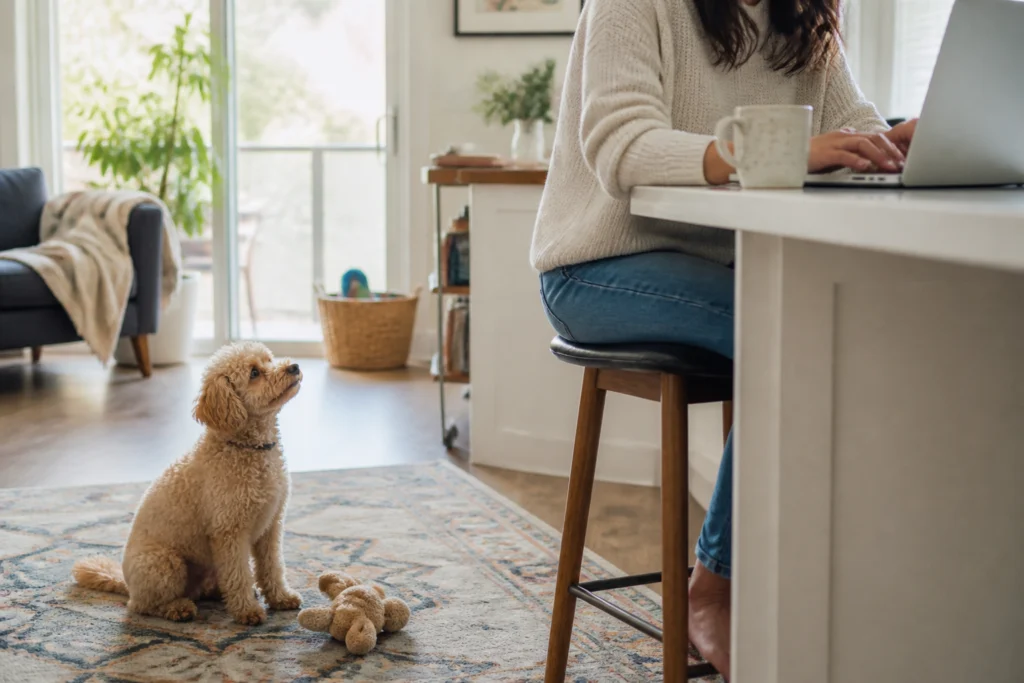
Your Toy Poodle probably stares because looking at you has become useful. You may be about to serve dinner, open the door, throw a toy or make room on your lap. Sometimes the look is simply quiet social contact. The best clue is not the stare by itself, but the situation around it and whether your dog looks relaxed or unusually still.
Toy Poodles are attentive little companions with a close-up view of family life. They notice the cupboard you open before meals, the shoes you wear outside and the sound of a laptop closing. Their small size also invites quick responses: a glance can lead to being spoken to, stroked, lifted onto a chair or helped with a toy. It does not take long for eye contact to become part of their everyday communication.
Start with the scene, not the eyes
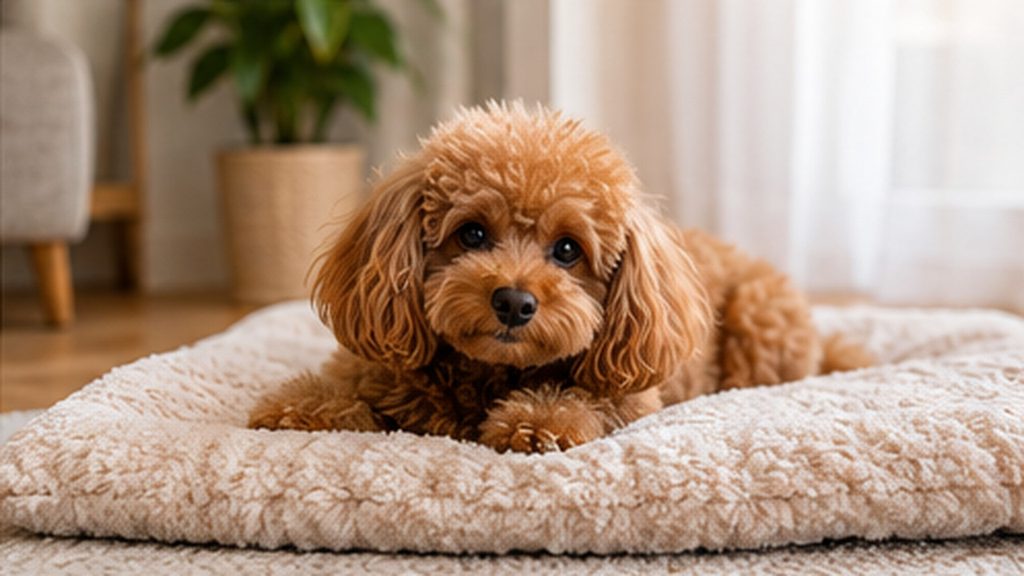
A Toy Poodle staring from a cushion while you read is giving you a very different message from one standing rigidly over a chew. Before deciding what the look means, take in the whole picture.
| Situation | What it may mean | How to respond |
|---|---|---|
| Resting with soft eyes and a loose body | Calm companionship or a casual check-in | Return the look briefly or carry on with what you are doing |
| Watching while you prepare food | Anticipation or a request for a share | Keep food rules consistent and reward waiting in a chosen place |
| Looking at you, then at the door | A request to go outside | Respond to a clear door signal rather than waiting for a long stare |
| Sitting beside a ball and watching you | An invitation to play | Ask your dog to bring or nudge the toy before play begins |
| Monitoring you from under a desk | Waiting for attention or for work to end | Provide a nearby mat and schedule short, predictable breaks |
| Holding a fixed look with a stiff posture | A request for more distance | Pause, turn slightly away and leave a clear route to move |
Relaxed eye contact is easy to leave. Your dog may blink, glance elsewhere, stretch or settle their chin again. A more serious stare tends to arrive with stillness: movement stops, the mouth closes and the dog appears reluctant to turn away. With a dense Toy Poodle coat, the change in posture may be easier to spot than a small change around the eyes.
Why your Toy Poodle seems to watch every move
Much of the day is built from repeated sequences. The kettle boils before breakfast. A particular jacket appears before a walk. A phone alarm marks the end of a work session. Your Toy Poodle can learn these details and begin watching as soon as the first clue appears.
That can make the behaviour seem constant even when it occurs in short bursts. Your dog may study you before breakfast, again when you approach the door and once more when you sit in the chair associated with evening lap time. Each episode has a separate purpose, although they all look like “staring” to you.
Responses from people can strengthen the habit too. Looking down, saying your dog’s name or reaching out a hand may be enough to make watching worthwhile. Toy Poodles are particularly easy to engage this way because they often sit directly beside a person, on furniture or beneath a chair where even a small movement attracts attention.
What staring means in common situations
At the dinner table
If your Toy Poodle alternates between your face and your plate, the target is probably obvious. Decide on the household rule before everyone sits down. If food from plates is off limits, it should remain off limits regardless of who is eating or how appealing the dog looks.
A small mat or bed placed beyond the movement of chairs gives your dog somewhere safe and clear to wait. Reward that position separately, using the dog’s own food or another planned activity rather than handing something down from the table. Mixed rules encourage longer, more determined watching.
Lap access also matters with a dog this small. Being lifted closer to the plate can turn a quiet look into an effective strategy. If your Toy Poodle is allowed on laps at other times, use a distinct cue for the invitation instead of picking the dog up in response to persistent eye contact.
While you work
A Toy Poodle can remain close without sitting beneath your feet or a rolling chair. Place a suitably sized bed beside the desk, where your dog can see you without occupying the walkway. Quietly reward settled behaviour before the staring begins.
Frequent replies such as “not yet” may not have the effect you expect. To a dog seeking interaction, your voice and glance are still attention. It is often clearer to offer contact during planned pauses and remain neutral between them.
Near the door
A stare followed by a turn toward the door is more informative than eye contact alone. You can make the request easier to understand by teaching one simple action, such as standing on a small mat near the exit or touching a hanging target.
Use the same signal for the same purpose. If waiting at the door sometimes leads outside and sometimes starts a game, the meaning becomes less clear for both of you.
Beside a toy
Toy Poodles may ask a person to animate a toy, retrieve it from under furniture or join a game. Instead of responding to a motionless stare, encourage a more obvious invitation. Bringing the toy to your hand, placing it by your feet or nudging it can all work.
Choose toys that are easy for a small mouth to carry. A request cannot become reliable if the ball is too large, the tug is too heavy or the toy repeatedly disappears beneath the sofa.
Before grooming or being picked up
Toy Poodles encounter frequent coat-care routines, so brushes, combs, towels and grooming surfaces quickly gain meaning. A dog may watch closely because they know what is coming next. Make the routine predictable: use the same location, invite the dog onto a stable surface or mat, and handle one area at a time.
Picking up deserves its own cue as well. Small dogs are often lifted without warning because it is convenient for the person. Saying a consistent word and waiting for a willing approach gives your Toy Poodle a clearer way to participate than staring and guessing.
Turn vague watching into clear requests
You do not need to discourage ordinary eye contact. Instead, decide which behaviours you would prefer when your Toy Poodle wants something.
- For play: bring a toy rather than sit and stare.
- For outdoor access: wait at a particular spot by the door.
- For lap time: stand beside the chair until invited.
- For attention during work: settle on a nearby mat and wait for a break.
- For help with a trapped object: look toward the object or lead you to it.
Make the clearer action successful. If your dog brings a ball, begin a short game when possible. If the door signal appears, respond without requiring an additional minute of staring. When the preferred request works reliably, your Toy Poodle has less reason to fall back on prolonged eye contact.
Timing helps. Reward the new action as it happens, not after the dog has abandoned it and resumed staring. Keep the response proportionate too; every glance does not need to launch a major activity.
When the stare is about sounds or movement
Some Toy Poodles watch their owners after hearing footsteps, doors, voices or activity outside. They may be checking whether you are about to react. Stay matter-of-fact, guide the dog toward a familiar resting place and reward calm disengagement from the sound.
If the watching regularly develops into vocal alerting, the guide to why Toy Poodles bark at every noise explains how household sounds can become cues and how to build a quieter response.
Respect a stare that asks for distance
Not every look is a request for attention. If your Toy Poodle becomes motionless around food, a toy, a resting place or unwanted handling, stop moving closer. Do not stare back, lean over the dog, reach for the item or use your size to block the way.
Turn your body slightly aside and allow room to leave. Keep children out of the situation and avoid picking the dog up. The aim is to reduce conflict, not to win possession of an object in that moment. Future access to the item or area can then be managed more carefully through everyday training and household setup.
A simple way to spot the pattern
If the staring still feels mysterious, note only the most obvious occasions for a couple of days. Write down the location, the approximate time and what your Toy Poodle did immediately afterward. You may find that most episodes belong to one or two routines, such as meal preparation, the end of video calls or the moment a favourite chair becomes available.
This short record also reveals human habits. Perhaps staring at the table earns conversation, while staring beside the toy starts a game. Once you can see the pattern, you can keep the responses you like and replace the confusing ones with clearer signals.
The practical takeaway
Most Toy Poodle staring is ordinary communication, close observation or anticipation. A loose dog who can look away easily is usually checking in or waiting for a familiar event. A dog who looks from you to a door, toy or chair is offering a clue about what they want. For a closely related step, see Teaching a Toy Poodle to Stay Calm When Visitors Arrive.
Respond to useful signals, teach specific alternatives for common requests and avoid turning persistence into the only way to get your attention. When the stare arrives with marked stillness or guarding, create distance instead. The goal is not to stop your Toy Poodle looking at you; it is to make the conversation easier for both of you to understand.