How to Teach a Toy Poodle to Drop Something Without Chasing
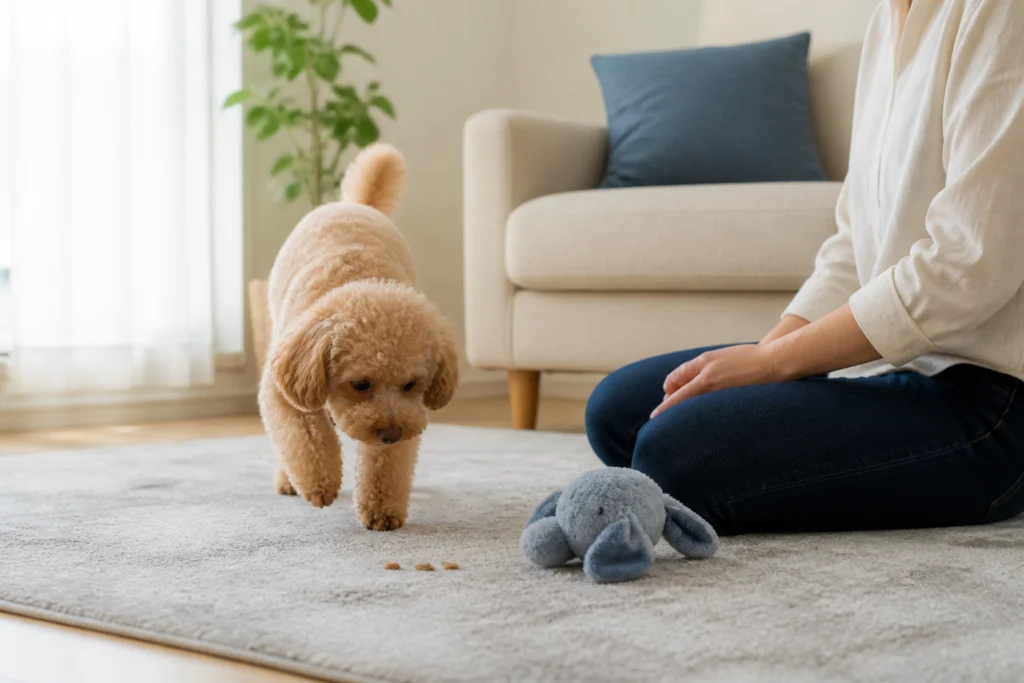
To teach a Toy Poodle to drop something without chasing, stop following them, offer a worthwhile exchange, and wait until they have released the item and moved away before picking it up. Practise first with a safe toy, then introduce the word drop and gradually hide the reward so your dog learns to release on cue.
Check for danger or guarding first
This guide is for relaxed dogs learning voluntary exchanges. If your Poodle freezes over an item, stiffens, growls or snaps when someone approaches, stop the exercise and move away. Keep children and other animals out of the area, avoid punishment or forced removal, and speak to your vet and a qualified behaviour professional who uses reward-based methods before practising further exchanges.
If your dog is choking, struggling to breathe, or may have swallowed something harmful, contact your vet or an emergency veterinary service immediately. Do not wait for symptoms after a suspected harmful ingestion. An emergency needs veterinary help rather than another training attempt.
When your Toy Poodle already has the item
Following a dog around furniture can turn retrieving an object into a game of keep-away. Stop closing the distance and give your Poodle room to pause.
For a relaxed dog holding an item that poses no immediate danger, use this sequence:
- Become still. Keep your hands away from the object and avoid reaching over your dog.
- Turn slightly sideways. Leave space for your Poodle to move without feeling cornered.
- Use the cue once if it has been taught. If drop is unfamiliar, begin with the exchange instead.
- Offer a better option. Toss a few tiny, soft treats away from the object, where your dog can easily see or find them.
- Watch for the release. Collect the item only after it is on the floor and your dog has moved far enough away for you to retrieve it without competing.
- Redirect calmly. Put the object out of reach and offer a permitted toy or another familiar activity.
If your Poodle carries the object over to the treats, the exchange has not worked yet. Keep your distance rather than reaching toward their mouth. If they stiffen or guard it, follow the guarding advice above.
Choose rewards your dog values. A routine biscuit may not compete with an exciting stolen tea towel. Use pieces small enough for comfortable eating and several repetitions, without turning one exchange into a large snack.
Set up an easy practice session
Begin in a quiet room with unrelated objects put away. Close doors to prevent a chase through the house, while leaving your Poodle enough space to move comfortably.
Work from a chair or the floor if that helps you avoid leaning over your dog. Keep your hands low and movements unhurried.
Choose a sturdy toy suitable for your Poodle’s mouth, with no loose parts and no pieces small enough to swallow. Start with a moderately interesting toy rather than the favourite one.
Have rewards ready before inviting your dog to play. If you are still establishing everyday training routines, What to Teach Your Toy Poodle During the First Week Home is a useful starting point.
Teach your Toy Poodle to drop something on cue
Start with a voluntary release
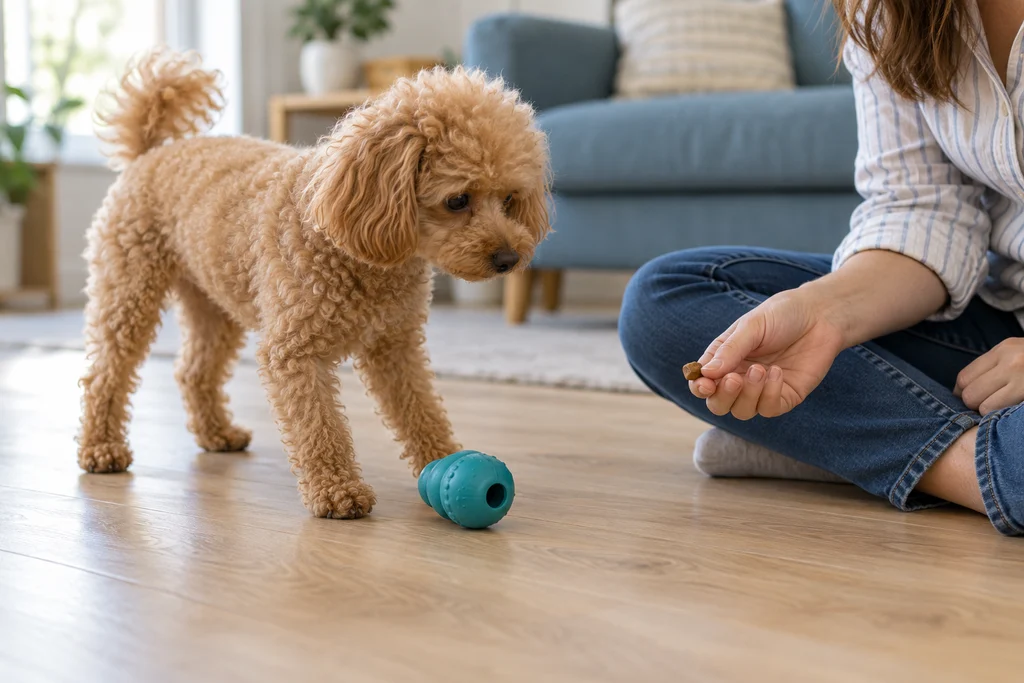
Let your Poodle hold the practice toy. Present a treat where they can notice it without pushing your hand toward their mouth.
Wait for them to release the toy. Mark the actual release with a short word such as yes, then toss the reward a little way from the toy. Once your dog has moved away, pick it up.
Offer the toy again when they finish eating. Returning safe practice toys helps prevent every release from predicting the end of play.
Repeat a few easy exchanges, then finish while your dog is comfortable and interested. If they retreat, become tense or stop engaging, pause and make the next session easier.
Add the cue before showing the reward
When your Poodle releases readily during the exchange, introduce one consistent word:
- Say drop once.
- Pause briefly.
- Present the treat.
- Mark when the toy is released.
- Deliver the reward away from the toy.
Use the same word across the household. Repeating several different cues can make the lesson less clear.
Hide the reward gradually
As your dog begins releasing after the word and before the treat appears, keep the food in a pocket or nearby container.
Say drop once and give your Poodle a brief opportunity to respond. If they release, mark immediately, then reach for the reward. Continue rewarding successful drops even though the food is now out of sight.
If they hold on, use the familiar exchange without repeating the cue. Make the next attempt easier with a less exciting toy or fewer distractions. Progress depends on comfortable, consistent responses rather than a fixed number of sessions.
Make moving away part of the routine
Dropping the item and allowing you to collect it are separate skills. A dog can release a toy and immediately pick it up again.
Deliver the reward far enough away that your Poodle moves clear of the object. If one piece disappears too quickly, scatter two or three small pieces across a nearby clear patch of floor.
Retrieve at an ordinary pace. If you feel you have to race your dog, create more distance or simplify the exercise.
Vary what happens after successful practice:
- Return the toy and continue playing.
- Offer another permitted toy.
- Reward the release and finish the session.
Household objects do not need to be returned. Save the return-and-play routine for safe training toys.
Use two toys if play is the better reward
Some dogs find another toy more appealing than food during play. Have two suitable toys with similar appeal ready.
Let your Poodle hold one, then move the second along the floor. When the first is released, mark and immediately begin playing with the second.
Once the exchange happens readily, say drop before moving the second toy. As your dog starts responding to the word, keep that toy still or out of sight until the release occurs.
Avoid pulling the first toy out of their mouth. The exercise should reward letting go voluntarily.
Practise in different situations gradually
An easy drop in one room does not guarantee the same response everywhere. Change one part of the exercise at a time:
- Introduce another safe toy.
- Practise with familiar toys in another quiet room.
- Work while standing rather than seated.
- Introduce a more desirable toy.
- Add a mild distraction at a comfortable distance.
If your Poodle begins circling furniture, retreating or waiting for visible food, return to an easier setup. Avoid using stolen or dangerous objects to test the cue.
Common problems and useful adjustments
Your Poodle backs away when you reach
Keep your hand away from the toy during the exchange. Reward the release, let your dog move away, then retrieve from the floor. If backing away comes with stiffness, freezing or growling, stop and seek professional support.
The cue works only when food is visible
When teaching a Toy Poodle to drop something, make the cue predict the exchange before hiding the food. Return to an easy toy and practise saying the cue before presenting food. Reward releases that happen during the brief pause, then gradually keep the food out of sight. Avoid repeatedly asking while waving a treat.
Your Poodle grabs household objects to start a trade
Put portable items such as socks, tissues and hair accessories out of reach. Keep necessary exchanges calm, and provide regular play with permitted toys. Do not withhold an exchange to make a point when an object needs to be recovered safely.
Your Poodle drops and immediately grabs again
Move reward delivery farther from the toy so your dog has time to turn away. Collect only when there is enough separation. If they rush back before you can retrieve comfortably, simplify the session.
Your Poodle will not release a favourite toy
Use a less valuable practice toy or try the two-toy exchange. Build up gradually instead of repeating the cue around the hardest item.
Teach drop and leave it as separate skills
Drop asks your Toy Poodle to release something already in their mouth. Leave it asks them not to pick it up.
For help before your dog takes an object, read the guide to teaching a Toy Poodle to leave household items alone.
Keep practice adult-led. Children should not take objects from the dog or join retrieval games.
Keep the finished skill simple
Teaching your Toy Poodle to drop something reliably starts with one cue, a voluntary release, and enough space to collect the object calmly. Keep practising with safe toys and reward successful responses as you introduce new situations.
For another everyday training task, see How to Get a Toy Poodle Comfortable Wearing a Harness.