Why Toy Poodles Seem So Hard to Potty Train
Toy Poodles can seem unusually hard to potty train because there is little margin for missed timing. A young puppy may need to go with very little warning, give only a subtle signal, and have an accident small enough to remain unnoticed.
That does not mean your puppy is stubborn or that you are failing. In most cases, the problem is a mismatch between the puppy’s current ability and the freedom, schedule or supervision they have been given.
Toy Poodles really can feel harder to potty train because the margin for error is smaller. Their bladders are tiny, their habits lock in quickly, and one off day can make the whole thing feel messy again. For a closely related step, see Why Your Toy Poodle Puppy Biting Feels So Intense.
Toy Poodles can be trained very reliably. The routine simply needs to be clearer and more consistent than many owners initially expect.
Why It Feels Random
Potty accidents often feel unpredictable because owners are working with several challenges at once:
- a small puppy with limited physical capacity
- fast shifts from comfortable to urgent
- signals that may be as subtle as wandering away or briefly sniffing
- outdoor distractions that interrupt the job
- indoor accidents that are easy to miss behind furniture or on a rug
- a puppy whose intelligence is easy to mistake for physical readiness
That last point catches many people. Toy Poodles often learn words, routines and household patterns quickly, but understanding where to go does not automatically mean a puppy can wait for a convenient time.
A puppy may have several clean days because the schedule and supervision were working well. If the owner then waits longer between trips, opens another room or becomes less watchful, an accident appears. It looks like the puppy forgot the training, but the conditions changed before the habit was ready.
The Routine Usually Slips Before the Puppy Does
Most setbacks do not begin with a puppy deliberately abandoning the rules. They begin with small changes in the day.
Breakfast runs late. Play lasts longer than usual. The puppy wakes from a nap while someone is on the phone. A potty trip becomes a quick visit to a distracting yard, and nobody checks whether the puppy actually finished.
Maybe you stretched the gap between potty trips. Maybe outside got too exciting. Maybe the puppy started wandering further around the house. Maybe you stopped rewarding because things seemed better. For the next part of this routine, read Why Is My Toy Poodle Peeing Inside Again?.
Those small changes matter more with a Toy Poodle because the window between needing to go and having an accident may be short. Instead of asking why the puppy is doing this, review what happened immediately beforehand:
- Had the puppy just woken up, eaten, drunk or played?
- Was the previous outdoor trip successful or merely attempted?
- Did access to the house increase?
- Was anyone actively supervising?
- Did weather, visitors or a schedule change affect the routine?
An accident is useful information. It shows that the current gap, level of freedom or potty setup was too difficult at that moment.
Build the Schedule Around Events, Not Just the Clock
A clock can help, but a young Toy Poodle’s day is not perfectly predictable. Activity, sleep, food, water and excitement can all change when the next trip is needed. A reliable routine uses both regular intervals and specific events.
Offer a potty opportunity:
- as soon as the puppy wakes in the morning
- after every nap
- after meals and noticeable drinking
- after energetic play, training or excitement
- before and after time in a crate or pen
- before giving access to a larger area
- before settling for the night
The correct interval is the one your puppy can currently manage without repeated accidents. Rather than relying on a rigid age-based formula, watch the results. If accidents repeatedly happen before the next planned trip, shorten the gap.
Use the Same Short Sequence Each Time
- Take the puppy directly to the chosen potty area.
- Keep the trip calm and limit wandering or play at first.
- Give the puppy a few quiet minutes to sniff and settle.
- Use a simple cue if you want one, but avoid repeating it constantly.
- Reward immediately after the puppy finishes.
- Allow a little sniffing or play afterward when practical, so eliminating does not always make outdoor time end.
Reward timing matters. Waiting until you are back indoors can make it unclear which action earned the reward. Praise and reward while you are still at the potty spot.
If Your Toy Poodle Does Not Go
Do not assume an unsuccessful trip has emptied the puppy. Bring them back inside for a brief period of close supervision or time in a safe, familiar puppy area, then try again. Giving immediate freedom after an unsuccessful trip often leads to an accident behind a chair or on the nearest rug.
The Biggest Mistake Is Adding Freedom Too Early
One clean stretch does not always mean the habit is reliable. It may mean the puppy was managed well—and good management is how the habit is built.
Trouble starts when several parts of the structure disappear at once:
- potty trips become less frequent
- rewards stop
- supervision becomes casual
- multiple rooms open up
- the puppy is expected to signal clearly every time
Increase freedom in one small step at a time. Open one additional area or allow a short period of supervised exploration after a successful potty trip. Avoid increasing both the space and the time at once.
If accidents return, reduce freedom without making it punitive. Go back to the last setup that worked, rebuild a clean pattern, and try the next step again later.
Make the Correct Potty Place Obvious
Consistency of location and surface helps a Toy Poodle understand the rule. If the goal is outdoor toileting, frequent switching between grass, rugs and loosely placed indoor pads can make the distinction less clear.
If you need a permanent indoor toilet option, keep it in one defined location and use it consistently. If you want outdoor-only habits, focus rewards and repetition on the outdoor surface instead of moving temporary pads around the home.
Weather can complicate this. Some Toy Poodles become distracted or reluctant on wet grass, in wind or in cold conditions. Use a sheltered spot when available, keep the first part of the trip calm, and reserve play or exploration until after the puppy goes. The objective is not to make the weather enjoyable; it is to keep the routine familiar enough that the puppy can complete the task.
Learn the Small Signals
Not every Toy Poodle walks to the door and asks to go out. Young puppies may offer only a few seconds of warning. Common signals include:
- leaving play abruptly
- sniffing one area with unusual focus
- circling or pacing
- moving toward a rug, hallway or hidden corner
- becoming restless after waking
- wandering away from the people in the room
Signals vary, so proactive trips are still more reliable than waiting for the puppy to ask. Door signals can be taught later, but they should support the schedule rather than replace it before the puppy is dependable.
What to Do When an Accident Happens
If you catch the puppy beginning to go, interrupt gently and take them to the correct place. If you find the accident afterward, simply clean it. A delayed correction cannot show the puppy what should have happened instead.
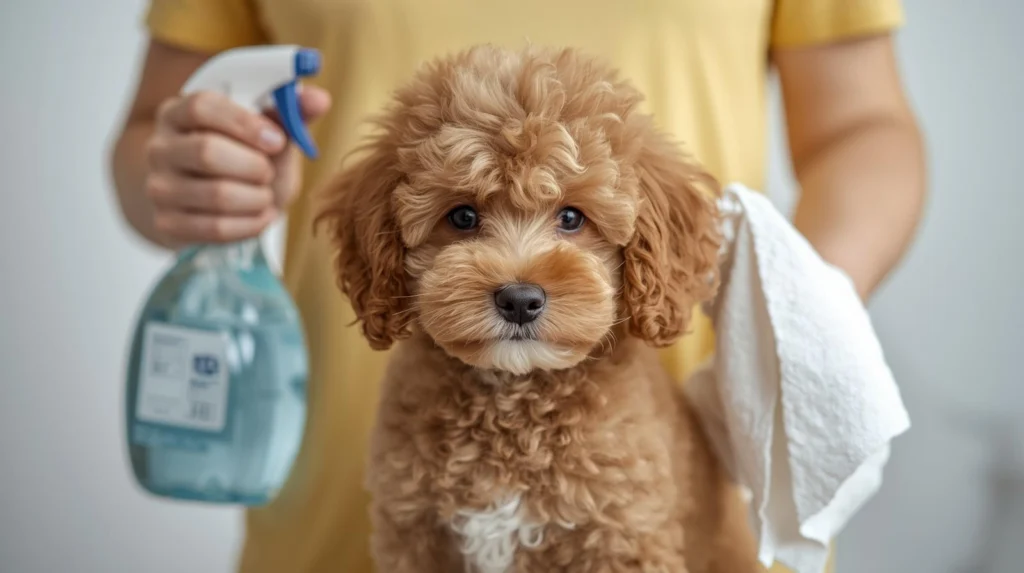
Clean the area thoroughly with a cleaner intended for pet accidents. Lingering odor can draw a puppy back to the same location even when the spot appears clean to you. Temporarily block access to repeat locations if needed.
Then review the sequence:
- How long had it been since the last successful potty trip?
- What was the puppy doing immediately beforehand?
- Was the puppy supervised or merely in the same general area?
- Has this location or time of day caused trouble before?
Punishment may make a puppy reluctant to eliminate in front of you, which can make outdoor trips and indoor supervision harder. The useful response is to clean, adjust the setup and create a quicker opportunity to succeed.
Troubleshoot the Pattern, Not Just the Accident
| What keeps happening | What to check | What to change |
|---|---|---|
| The puppy goes soon after coming inside | The outdoor trip may have been too distracting or ended before the puppy finished | Use a quieter area, wait calmly, and supervise closely if the trip is unsuccessful |
| Accidents happen during or after play | Excitement may be masking the puppy’s early signal | Add a potty break before play and again when activity ends |
| The same rug or corner is used repeatedly | The surface, privacy or remaining odor may be attracting the puppy | Clean thoroughly, block the area and increase trips to the correct surface |
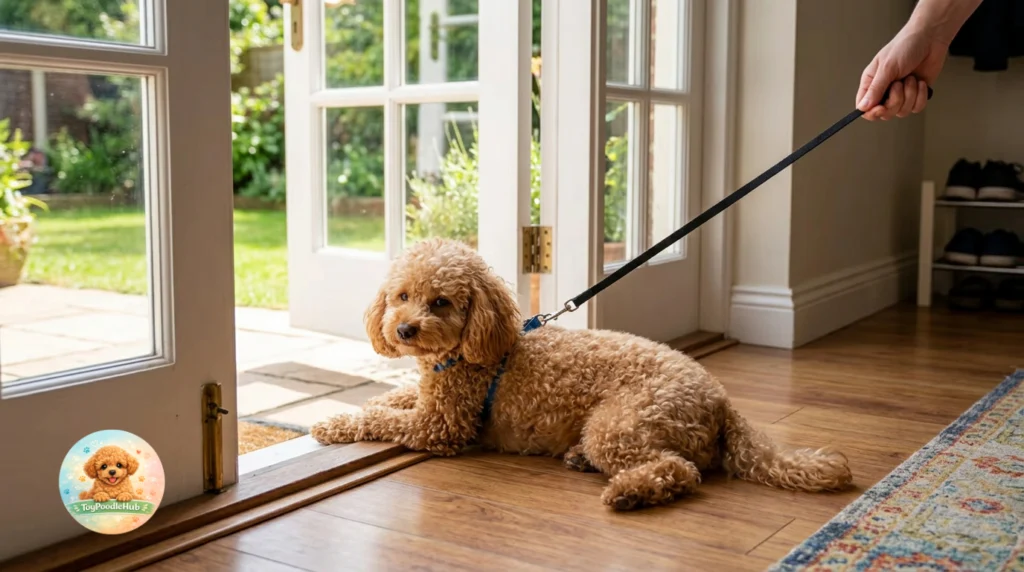
| Accidents happen while you are busy | The puppy has more unsupervised freedom than they can handle | Use a nearby pen, gate or leash-based supervision when your attention is divided |
| Progress disappears after several good days | Trips, rewards or supervision may have been reduced too quickly | Return to the last successful routine before expanding freedom again |
| The puppy refuses to go in bad weather | The location may feel too exposed or distracting | Use a consistent sheltered area and keep the trip focused until the puppy goes |
Use a Simple Reset When Things Get Messy
Do not wait for a run of accidents to correct itself. For several days, return to a more structured version of the routine:
- Record when your Toy Poodle eats, drinks, sleeps, plays and eliminates.
- Schedule trips before the times when accidents usually happen.
- Keep the puppy in the same room as you or in a safe puppy area.
- Reward every success immediately.
- Limit access to repeat accident locations.
- Expand freedom only after the cleaner pattern is established again.
A short written log is often more useful than memory. It can reveal that accidents cluster after evening play, after a particular nap or when the gap between trips becomes slightly too long.
If toileting changes suddenly, seems unusual or appears uncomfortable, ask a veterinarian rather than assuming it is purely a training setback.
What Reliable Progress Actually Looks Like
Success is not simply one accident-free week. A more useful sign is that your Toy Poodle regularly eliminates in the chosen place, can handle the current schedule, remains clean with a reasonable amount of freedom and begins to show a recognizable signal.
Potty training becomes much less confusing when you stop testing the puppy and start building a repeatable pattern. Use frequent opportunities, immediate rewards, close supervision and gradual freedom. If accidents increase, tighten the routine early instead of waiting for the habit to unravel.
If you want the full routine, The Tiny Bladder System walks you through a calm, practical potty setup that actually makes sense for tiny bladders and real-life schedules.
If puppy biting is adding to the chaos, read Calm The Bite next.
And if your puppy is also struggling to feel okay when left alone, Stop Toy Poodle Puppy Separation Anxiety is worth reading too.
You can also start with the free Toy Poodle Puppy Training Chart if you want a simple roadmap for the first 6 months.
Written by Toy Poodle Hub Toy Poodle Hub creates practical, real-life resources for Toy Poodle owners dealing with puppy biting, potty training, barking, separation anxiety, and everyday routine challenges. This post is for educational purposes only and is not veterinary advice. For a closely related step, see What to Teach Your Toy Poodle During the First Week Home.