
How to Travel Safely in the Car With a Toy Poodle
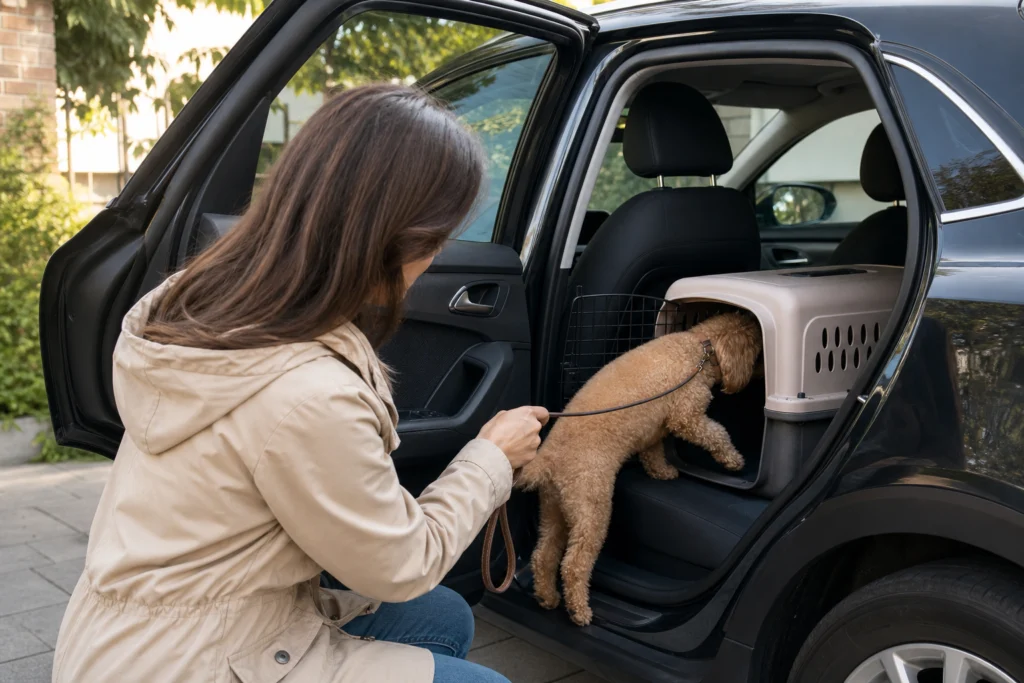
To travel safely in the car with a Toy Poodle, use a secured carrier or a properly fitted vehicle harness in the rear seat. Choose a product with credible crash-test information for the model and size you are buying, install it using its stated belt path or anchor points, and keep your dog contained whenever the vehicle is moving. A lap, loose bed or unsecured booster seat is not a safe substitute.
Start with the restraint, not the road trip
Toy Poodles are small enough to disappear behind a seat, squeeze through a narrow opening or jump out before an owner has gathered the leash. Their size makes containment especially important, even for a five-minute drive.
You have two practical options: a travel carrier fixed to the vehicle or a car harness designed for use with a compatible seat-belt connection. Look beyond phrases such as “travel safe” or “car friendly.” Useful product information should identify how the restraint was tested, which sizes were included and how it must be installed.
When a carrier makes sense
A carrier gives a Toy Poodle a defined space and simplifies door control. It can be a good choice for a dog that already enjoys resting in an enclosed den at home. The carrier should:
- Match your dog’s current measurements rather than being chosen by breed label alone.
- Have secure closures and unobstructed ventilation.
- Attach firmly using the installation method provided for that model.
- Offer enough room for the positions described in its sizing guide without leaving a large empty area.
Placing a carrier on the seat is not enough. If it can slide, tip or fall into the footwell during firm braking, it has not been properly secured. For the next part of this routine, read Toy Poodle Crying When Left Alone: A Calm Owner’s Guide.
When a vehicle harness may suit your dog
A harness allows a little more freedom of posture while keeping the dog in one seating position. For a Toy Poodle, the main challenge is finding a model small enough to sit correctly on a narrow body. The neck opening should remain in place when the dog turns or shifts, and the straps should lie flat rather than twisting beneath the curls.
Connect the car restraint only to the part of the harness intended for vehicle use. A collar can hold identification, but it should not serve as the attachment point for the seat-belt connector.
Check the fit beneath the coat
A fluffy coat can make a harness look closer-fitting than it really is. Run your fingers along each strap so you can feel where the webbing sits against the body. Check that no buckle is half-fastened or hidden beneath a curl.
Repeat the fitting check after grooming. A Toy Poodle clipped short may have noticeably more space inside a harness that fitted over a longer coat. Likewise, a thick winter trim can bunch beneath straps or obscure the adjustment points. The restraint should fit the dog, not the outline created by the coat.
Do not bulk out a poor fit with a sweater, blanket or extra padding. If the smallest adjustment is still loose, choose a different size or design.
Introduce the setup away from travel pressure
The first lesson should not happen when you are late for an appointment. Let your Toy Poodle explore the carrier or wear the harness at home, where nothing else is changing. Keep the sessions brief and use a few pieces of the dog’s usual food or a favourite toy to build a pleasant routine.
- Reward interest. Mark and reward a glance, sniff or step towards the equipment.
- Practise getting into position. Encourage the dog into the carrier, or fit the harness and ask for a short stand or sit.
- Add a few seconds of containment. Close the carrier door or connect the harness, then finish while the dog is still settled.
- Move to the parked car. Load your Toy Poodle, sit nearby and unload again without starting the engine.
- Add the engine and a very short drive. A quiet loop close to home is enough for the first outing.
Increase the length of the drive gradually. If your dog begins pawing at the carrier, twisting in the harness or repeatedly trying to change position, make the next practice easier rather than pushing on to a long journey.
Create a calm loading routine
Prepare the car before bringing your Toy Poodle outside. Clear loose objects from the rear seat, secure the carrier or arrange the harness connection, and place anything you need for the trip where it will not roll towards the dog.
Approach the car with the walking leash attached. Open the rear door only when you are ready to load. If the step is too high for your small dog, lift with one hand supporting the front of the body and the other supporting the rear. Do not hoist the dog by the leash or harness straps.
Once your Toy Poodle is in place, fasten the carrier or vehicle harness and check the connection before closing the door. Keep the routine quiet and predictable. Excited chatter can turn loading into a bouncing, spinning game, which is the opposite of what you want beside an open car door.
Make the rear seat a distraction-free zone
Your Toy Poodle should remain secured for the entire drive. Do not allow the dog to move between seats, sit on a passenger’s lap or climb into the driver’s area. Positioning the restraint in the rear also keeps the dog away from the steering controls and front passenger airbag.
Keep the cabin comfortable and make sure luggage cannot fall against the carrier or harness connection. A thin familiar mat may help a carrier feel more inviting, provided it does not cover ventilation panels, interfere with the door or alter the intended fit.
Windows should stay closed or open only by a small amount that does not allow the dog’s head through. Child locks are useful for preventing accidental operation of a rear window or door, but they do not replace physical restraint.
If your Toy Poodle needs attention, pull over somewhere suitable before reaching into the carrier or adjusting the harness. Feeding treats, untangling a lead or turning around to manage the dog while driving takes attention away from the road.
Handle breaks without creating an escape opportunity
For longer trips, choose stopping places away from active traffic and busy entrances. Before opening the dog’s carrier or disconnecting the car harness, attach the walking leash while the vehicle doors remain closed. Then open one door, release the travel restraint and guide or lift your Toy Poodle out. For a closely related step, see Why Your Toy Poodle Gets Upset the Moment You Pick Up Your Keys.
Use the same order when returning: walking leash on, dog into position, travel restraint connected, rear door closed. Repetition makes the sequence easier for both dog and owner without turning every stop into a lengthy inspection.
Never leave a Toy Poodle unattended in a parked vehicle. If everyone must leave the car, the dog should go too.
Teach a pause at the open door
Good restraint equipment matters, but a simple door cue adds another layer of control. Practise while the car is parked at home. Open the rear door slightly, reward your Toy Poodle for remaining in place, then close it again. Progress to a fully open door and release the dog only after a consistent word such as “out.”
This exercise is particularly useful for a quick, lightweight Toy Poodle that can dart through a gap before an owner has stood up. The cue does not replace the leash; it makes the leash-controlled exit calmer.
What to do when car routines become messy
- Your dog rushes towards the door: Practise the pause cue in a stationary car and reward stillness before opening the door any farther.
- The carrier is being avoided: Bring it indoors, leave the door open and rebuild interest through short food or toy games.
- Your Toy Poodle spins during harnessing: Break the process into smaller steps and reward four paws on a mat while you handle one strap at a time.
- The dog remains busy throughout the drive: Return to shorter routes and familiar destinations until settling becomes part of the routine.
- Loading triggers frantic excitement: Pause before approaching the car and wait for a simple behaviour, such as standing quietly or making eye contact.
Pack for a tidy, controlled journey
Bring water, waste bags, cleanup supplies, a spare leash and any food needed during the outing. Identification details should be current and securely attached. Store heavier belongings in the boot or another fixed area rather than piling them beside your Toy Poodle.
Keep the walking leash where a person can reach it at a stop, but not loose inside the carrier or draped around the dog. Small items can be grouped in a zipped travel bag so they do not scatter around the footwell.
A quick check before you leave
- The carrier or harness fits your Toy Poodle’s current body and coat length.
- The restraint is secured using the intended vehicle connection.
- Carrier doors and harness buckles are fully closed.
- Webbing is flat and free from trapped curls.
- The walking leash cannot tangle around the dog.
- Windows and rear-door locks are set.
- Air can circulate around the dog’s position.
- Bags and other loose objects are stored away from the restraint.
- The driver can concentrate on driving without managing the dog.
Safe car travel becomes much easier once the equipment, coat fit and door routine are familiar. For a Toy Poodle, secure containment and calm transitions matter more than elaborate accessories: choose a suitable restraint, practise in small steps and make every exit deliberate. A useful companion guide is How Much Sniffing Does a Toy Poodle Need on a Walk?.