
Why Your Toy Poodle Puppy Biting Feels So Intense
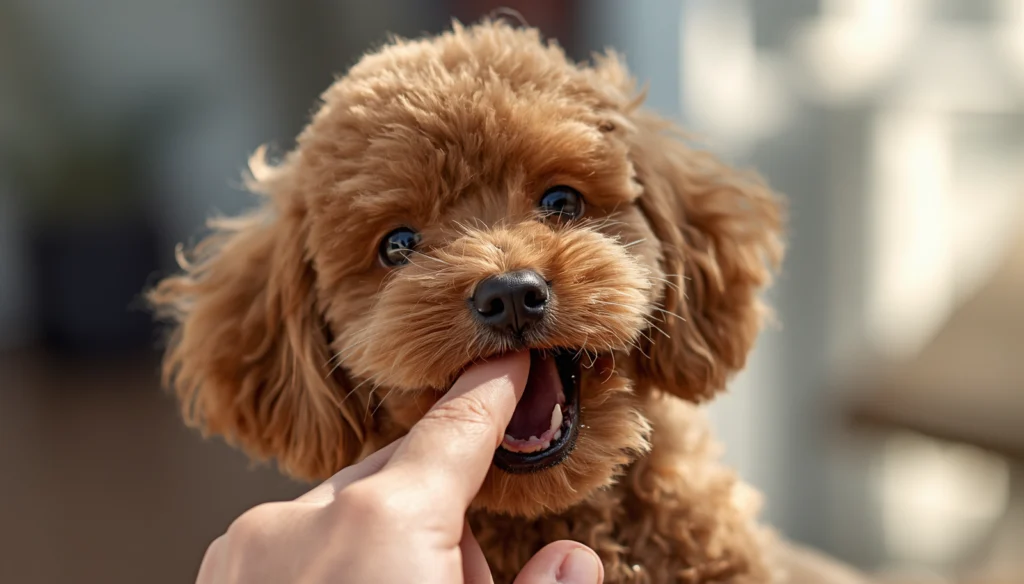
Toy Poodle puppy biting can feel relentless because these small, quick dogs are constantly close to your hands, ankles, sleeves and feet. Their puppy teeth are sharp, their reactions are fast, and even a short burst of mouthy play can leave you feeling as though the whole day revolves around avoiding teeth.
Most puppy biting is not aggression or an attempt to dominate you. It is usually a mixture of teething, exploration, excitement, frustration, tiredness and a rapidly forming habit. The most effective response is not a louder correction. It is a predictable routine that interrupts biting, lowers excitement and teaches your puppy what to do instead.
Bigger puppies might bite harder, but Toy Poodles can feel relentless because they’re always right there — under your feet, climbing into your space, grabbing anything that moves, and turning one tiny nip into a full drama production. For a closely related step, see Why Toy Poodles Seem So Hard to Potty Train.
You are not doing everything wrong because your puppy still bites. This is a demanding puppy phase, but the pattern becomes easier to change once you can see what is triggering it.
Why Toy Poodle puppy biting feels so intense
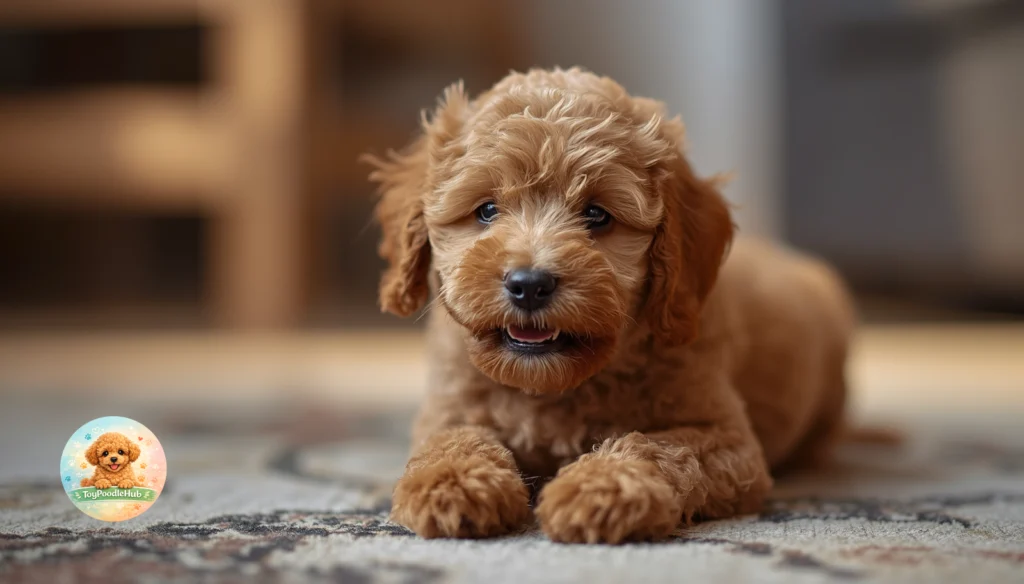
Toy Poodles are small enough to spend much of their time within reach of your skin and clothing. When a larger puppy mouths during play, you may be able to stand up and create space. A Toy Poodle can dart around your feet, grab a trouser leg or reach your hands while sitting beside you.
They are also observant and quick to learn cause and effect. If grabbing a sleeve makes you wave your arms, talk rapidly or chase them, that reaction can become part of the game. The puppy bites, the person moves, excitement rises and the puppy bites again.
This is why the behavior can appear to get worse very quickly. Your puppy is not necessarily becoming more hostile. They may simply be rehearsing an exciting pattern that works every time.
What is driving the biting?
Several causes can overlap in the same biting episode. Identifying the main one helps you choose a useful response instead of trying a different tactic every few minutes.
Teething and normal exploration
Puppies investigate objects with their mouths, and teething can make chewing especially appealing. A puppy calmly chewing fingers, furniture or fabric may need an appropriate chew and closer management rather than more exciting play.
Overtiredness
A tired puppy does not always look sleepy. Overtired Toy Poodle puppies often become faster, noisier and less able to respond to cues. They may race around, grab clothing and return immediately after being redirected. If the biting peaks after a long awake period or late in the day, rest may be more useful than extra exercise.
Excitement and frustration
Fast games, visitors, children moving around, a busy walk or being prevented from reaching something can push a puppy beyond the point where they can make calm choices. Biting then becomes an outlet for all that energy and frustration.
A learned attention game
Pulling your hands away quickly, squealing, repeatedly saying no or trying to catch the puppy can all be highly engaging. Even negative attention can keep the game going. Some puppies become more excited when people yelp, so you do not have to use that approach if it increases the biting.
Find the pattern before trying to fix it
If the biting feels random, keep a simple note for a few days. Record when it happened, what your puppy was doing beforehand and what ended the episode. Common patterns include:
- biting during the final minutes of play;
- grabbing ankles when people walk through the room;
- mouthiness after visitors or a stimulating outing;
- biting when someone sits on the floor;
- grabbing hands during brushing, wiping or handling;
- evening episodes after scattered naps or a busy day.
The useful question is not only, “How do I stop this bite?” It is also, “What happened during the previous ten minutes?” Prevention usually starts there.
The big mistake: waiting for full gremlin mode
Many owners wait until the puppy is already racing, lunging and hanging from a sleeve before trying to teach a lesson. By that point, the puppy is often too excited or tired to learn much. Offering five different toys, repeating cues and moving your hands around can add even more stimulation.
That’s why yelling, repeating “no,” or waving your hands around usually makes everything worse. It adds energy to a puppy who already has too much energy. For a closely related step, see Why Is My Toy Poodle Peeing Inside Again?.
Step in at the first signs: faster movement, repeated attempts to grab clothes, inability to stay with a toy or sudden frantic zooming. Ending play slightly early is easier than trying to regain control after the biting loop has started.
What to do when teeth touch skin or clothing
Choose one calm response that everyone in the household can repeat. A practical sequence looks like this: For the next part of this routine, read How Do I Teach a Toy Poodle to Leave Household Items Alone?.
- Make the target boring. Stop moving the bitten hand, foot or trouser leg as much as you safely can. Pulling away sharply can trigger chasing and tugging.
- Redirect once. Offer a suitable toy or chew near the puppy rather than waving it around. If your puppy takes it, calmly praise or begin gentle play with that item.
- Remove attention if biting continues. Stand up and step behind a gate or other nearby barrier for a brief pause. The goal is to end access to the game, not to frighten or isolate the puppy.
- Reset the situation. When you return, choose a calmer activity. If the puppy immediately starts biting again, consider whether they need a quiet rest, a toilet break or a lower-stimulation environment.
Do not turn the pause into a chase, lecture or wrestling match. Avoid holding the muzzle shut, pinning the puppy or using the crate as punishment. Those responses do not teach an alternative and can make handling feel more confrontational.
Timing matters. Redirecting at the first approach is often more effective than producing food after a hard bite. Reward calm choices throughout the day—such as sitting near your feet, choosing a toy or settling on a bed—so biting is not the only behavior that earns your attention.
Prevent the next biting episode
Keep play short and structured
Stop energetic play while your puppy is still responding and able to release the toy. Follow it with a calmer transition, such as chewing, sniffing for a few pieces of food or settling in a quiet area. More intense play is not always the answer to intense biting.
Make legal chewing easy
Keep appropriate toys close to the places where biting usually happens. A toy stored across the house will not help much when your puppy is already attached to your sleeve. Rotate a small selection so there is an appealing option available without covering the floor in distractions.
Protect rest
Puppies need frequent opportunities to sleep without being disturbed by household activity. If your Toy Poodle keeps waking to follow every movement, provide a quieter rest area and build predictable breaks into the day. Rest should feel safe and routine, not like a penalty for biting.
Practice calm handling separately
Toy Poodles need regular coat, face, paw and body handling, which puts hands close to the mouth. Do not wait until a frantic biting episode to work on grooming manners. When your puppy is calm, practice very brief touches or a single gentle brush stroke, reward stillness and stop before patience runs out. If biting begins, make the session easier rather than gripping the puppy more tightly.
If your evenings feel feral, start there
Evening biting is one of the most common patterns because the day’s stimulation and missed rest can accumulate. Instead of bracing for the usual chaos, change the hour before it normally begins.
- Finish rough or fast play earlier.
- Lower household excitement before the usual biting window.
- Offer a toilet break and a calm chewing activity.
- Keep hands and loose clothing away from floor-level play.
- Help your puppy settle before frantic behavior appears.
If the puppy becomes wilder after more exercise, do not assume they need another energetic game. Try a quieter transition and protected rest. The goal is not to exhaust the puppy; it is to help them move from activity to calm.
Troubleshooting common problems
My puppy ignores the toy
The puppy may already be too aroused for redirection. Stop offering more toys, create space and reset the situation. Next time, offer the toy before the usual trigger or end play sooner.
My puppy only bites one person
Compare how that person moves and responds. Quick hand movements, floor play, flowing clothes or a dramatic reaction may be maintaining the game. The answer is not blame; it is getting everyone to use the same calm routine.
Walking away makes the puppy attack my ankles
Do not try to outrun a small, excited puppy. Freeze first, then use a nearby barrier when possible. During known ankle-biting times, manage the space and give your puppy an appropriate activity before people begin moving around.
The biting happens during grooming
Separate grooming practice from high-energy periods. Shorten the session, reduce the difficulty and reward calm participation. Repeated biting only during a particular kind of touch deserves careful attention rather than stronger restraint.
How to tell whether the routine is working
Progress is not always a day with no biting. Look for shorter episodes, softer mouthing, easier redirection, fewer damaged clothes and a puppy who settles more quickly afterward. Improvement may be uneven, especially during exciting days or changes in routine.
Seek individual help from a qualified, reward-based trainer if the biting is difficult to manage safely, regularly breaks skin, involves stiff or guarded body language, or repeatedly occurs when someone approaches food, toys or resting spaces. Professional observation can help distinguish an overexcited puppy pattern from behavior that needs a more tailored plan.
You are not failing
This phase feels personal because you are the one being bitten, but it is still a puppy problem—not proof that you chose the wrong dog or ruined your training. Watch the pattern, intervene earlier and use the same low-drama response each time.
For most households, consistency matters more than intensity. Calm prevention, appropriate chewing, enough rest and brief removal of attention give your Toy Poodle puppy a clearer path toward better habits.
Need a calmer, step-by-step plan? Calm The Bite gives you a simple, repeatable way to handle Toy Poodle puppy biting without yelling, guessing, or turning your evenings into a daily battle.
If potty training is also making life messy, read Toy Poodle Puppy Potty Training next.
And if your puppy struggles to settle when you leave the room, Stop Toy Poodle Puppy Separation Anxiety is the next best place to go.
Your free Toy Poodle Puppy Training Chart is also a good starting point if you want a simple first-6-month roadmap.